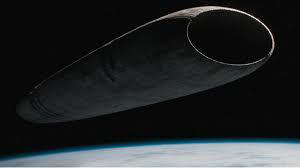
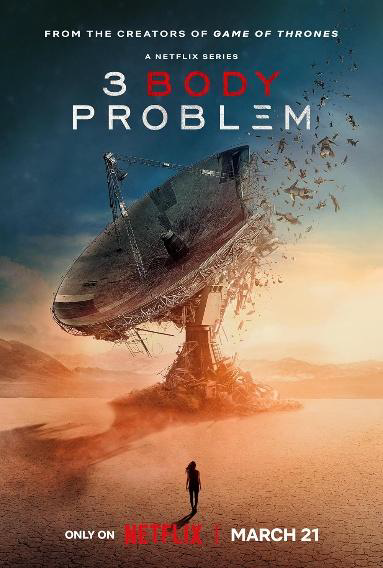
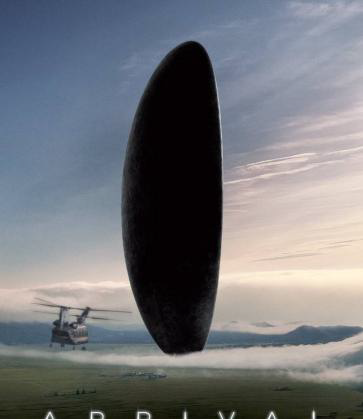
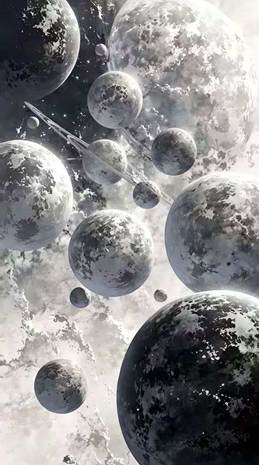
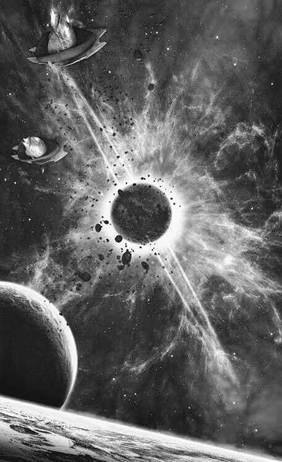
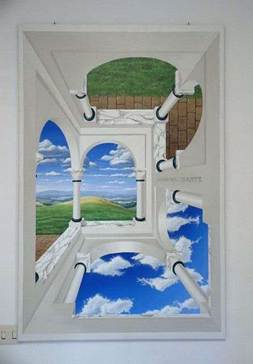
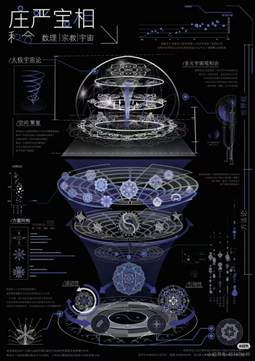
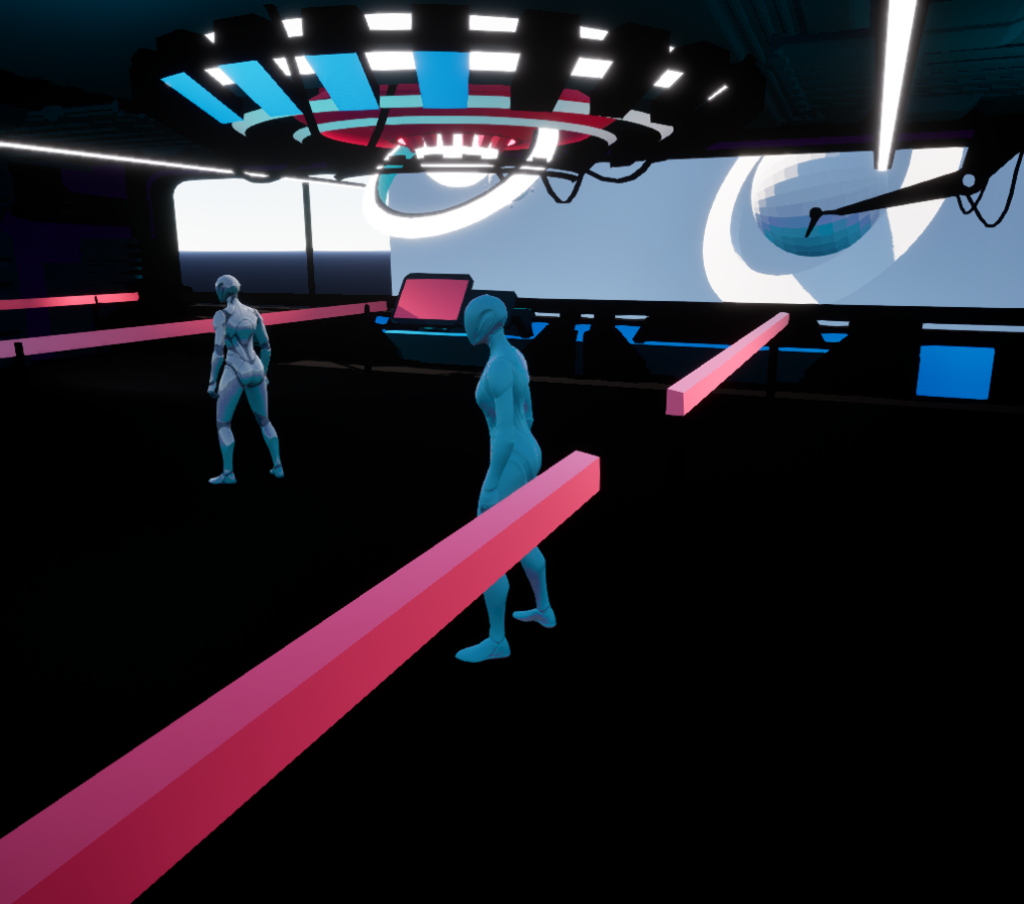
MR with Headset Users can see themselves and the environment around them through the pass-through mode, but the sky will turn into a starry sky, which is interactable. Users will experience the entire work as if they were on a tour.
Art style:
Reality
2D or 3D model for the stars
models can move and rotate a little bit, make some animation.
Voice: sound of message or noise.
Interaction:
user can straight their hand to touch, then they will heard the noise from the star or the sound of message.
Some items (ex. blackhole) will scale up when the user interacts with them.
Engine Version: Unity 6000.3.4f1
Items:
blackhole
3D model link: https://sketchfab.com/search?q=black+hole&type=models
galaxy
Nebula (as creature)
Pillars
J1407b
Wormhole
Movie Reference:
Dune
The Three-Body Problem
Arrival
WEEK2 19.01 – 23.01 Static 360 Filming Record
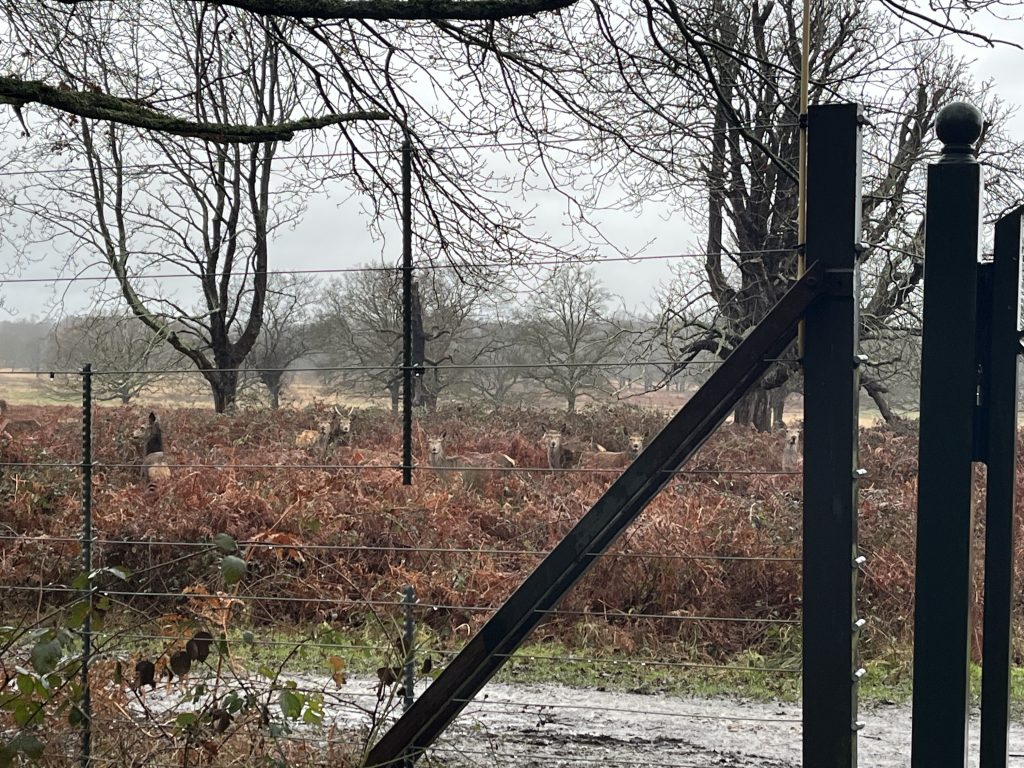
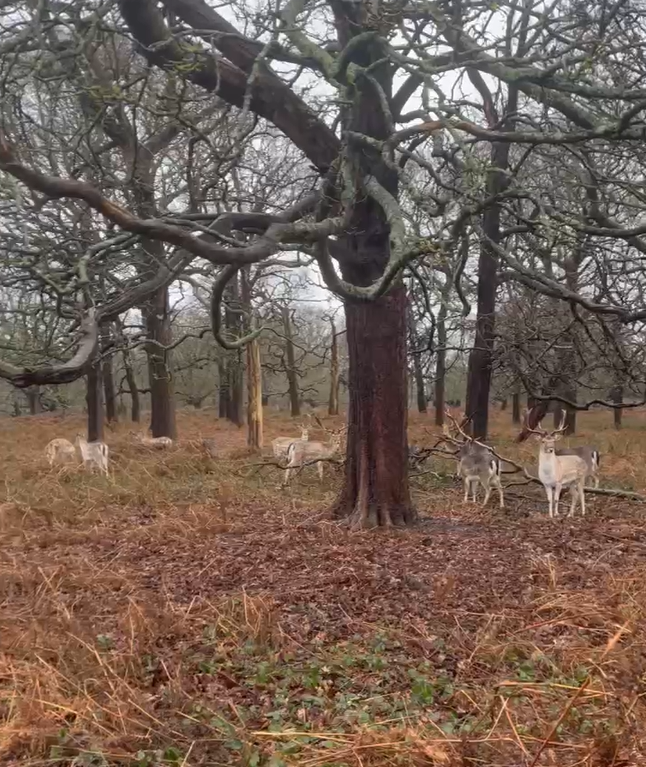
We went to Richmond Park and used a Insta 360 X3 camera to film the deer. However, it rained that day, the weather was very cold, and the ground was full of mud, so the final footage didn’t turn out very well.
WEEK3 26.01 – 30.01 Static 360 Filming Record
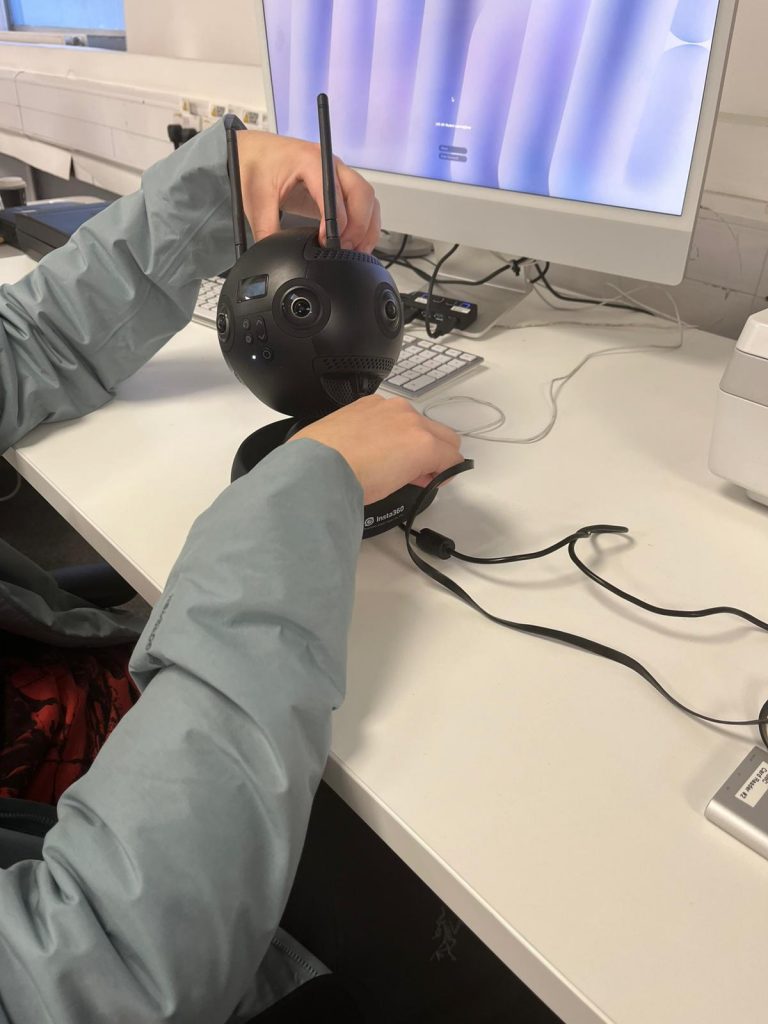
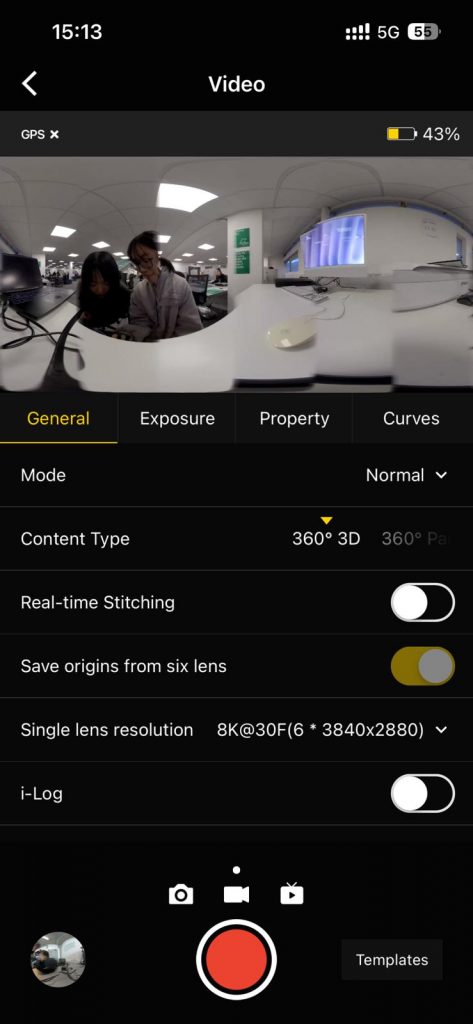
We borrowed the Insta360 Pro 2 camera and consulted our teacher about its functions, as well as thoroughly tested its settings and the entire workflow from recording to exporting.
We also tested the effect of moving shots (I acted as a human tripod here since we didn’t bring one).
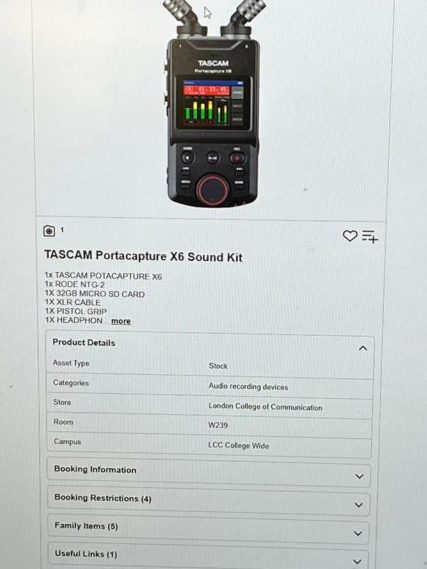
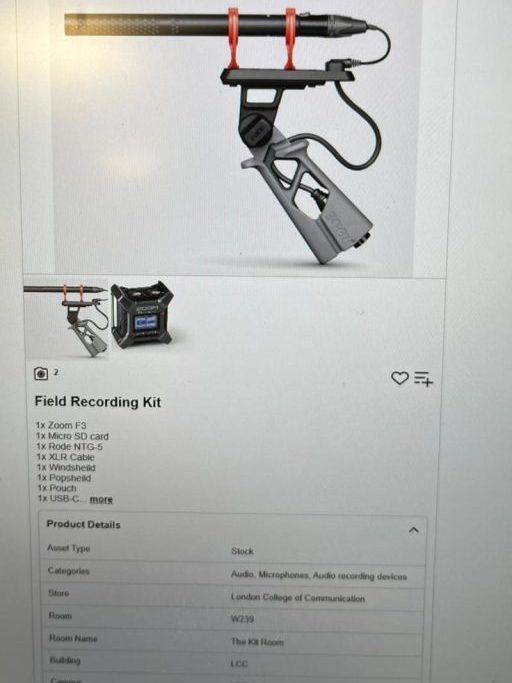
We also gained some knowledge about equipment for outdoor audio recording, including which gear to borrow and how to connect the equipment.
WEEK4 02.02 – 06.02 Static 360 Filming Record & Presentation
We revisited how the project should be filmed. This included continuing to use the deer footage, with us performing as the deer and standing in the same position, intercutting the shots. Through this, we discussed the relationship between reality and fiction, as well as the feeling of presence and absence.
However, after further discussion with the group, we decided to emphasize the effect of movement. We therefore changed the approach to filming a ball-passing game: when someone receives the ball, they introduce themselves. During the process, we want to experiment with guiding the audience and using spatial sound, and finally throw the ball toward the camera to give the audience a sense of being present.
WEEK5 09.02 – 13.02 Inspiration Idea Moving 360 Filming
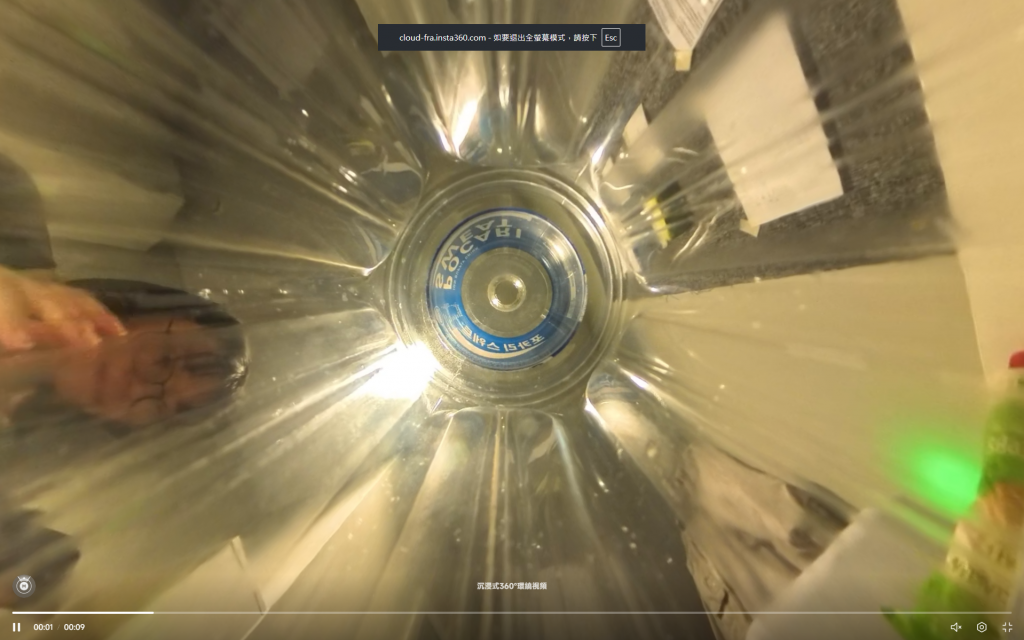
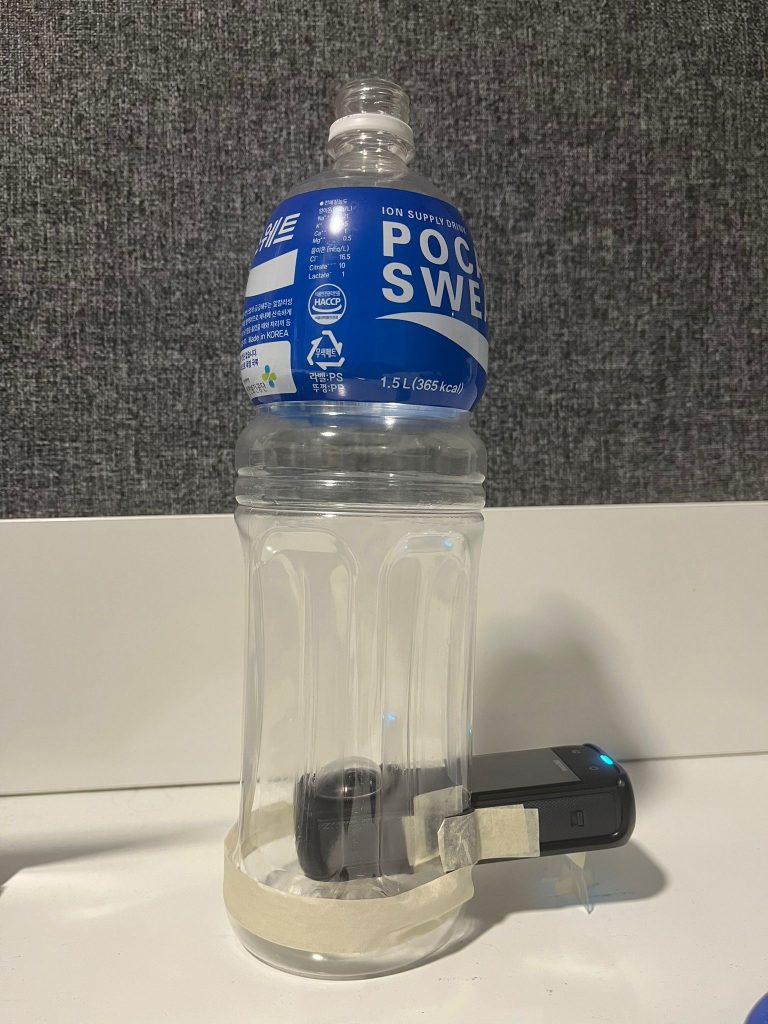
Last week, while discussing with classmates, we talked about wanting to include some fantastical scenes. Based on that, we came up with the idea of placing a 360 camera inside a transparent plastic bottle.
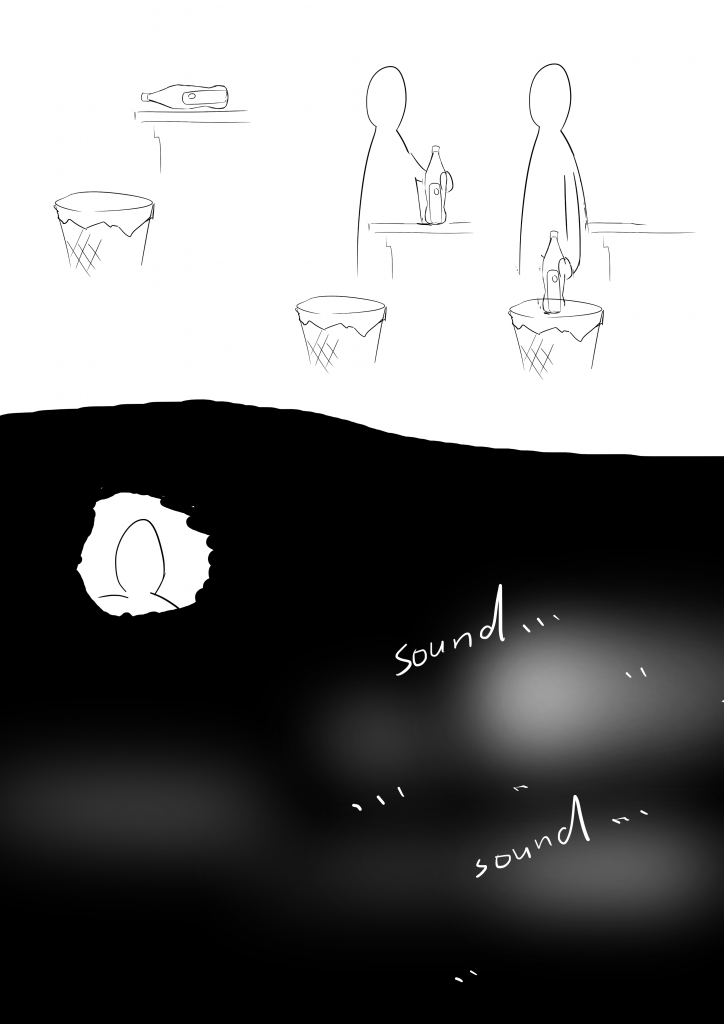
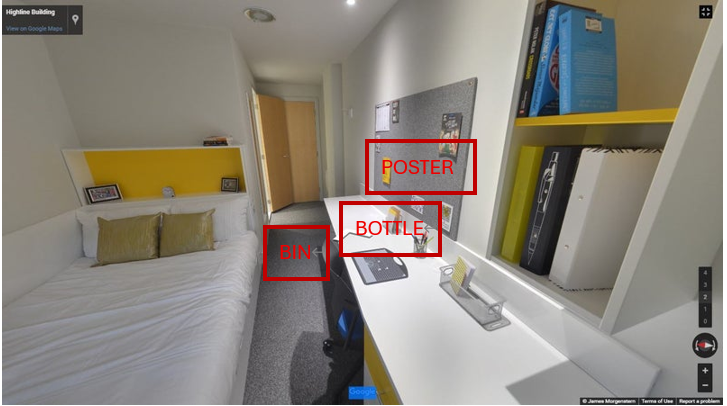
[Cut 1] At the beginning, the bottle is lying on a table. Then someone enters the frame, stands it upright, and throws it into a black trash can. The person ties up the garbage bag, and the image turns completely black.
[Cut 2] Once the garbage bag is sealed, we can experiment with light, shadow, and sound to create a fantastical effect.
We lay out the detailed concept elements, discuss them thoroughly, and then decide to make the sceㄇne after the object is thrown into the trash more fantastical. At the same time, we also want to explore some styles related to festivals.
Moving 360 camera
put insta 3X camera in the bottle
Slow motion when the bottle fall down into the bin.
After in the bin can show something unrealistic through light and sound.
the view in the scene can be show in the beginning, like the poster on the wall.
After turn into dark
We are considering whether rain at the outdoor venue of the film festival will affect the display of our work. Additionally, we want to use interactive posters to describe the design details of the project, such as the size data of NASA’s planets, etc.
Festival
Outdoor or Indoor?
Indoor view Use the shipping container space
Poster show the design and information
We’ve also decided to output a web version so that while the audience is waiting in line, they can experience parts of the work (with only the functionality available, but the screen will be entirely black). This will give them a sense of a preview and surprise.
Web
Black space. But can receive the signal.
With the interactive/moving poster.
WEEK6 16.02 – 20.02 Moving 360 Filming
We started implementing the idea from last week by placing the 360 camera inside the bottle. However, we encountered an issue because the image is created by stitching together two lenses, and the thickness of the camera caused a gap in the middle, resulting in a severe division in the image. The bottle also didn’t appear round. To solve this, we decided to lay the camera down, which fixed the problem.
We did our first test of the video effect. We filmed at the Kiki Muimui store, starting by taking something out of the fridge, passing through a park, putting it into a backpack, and finally throwing it into the kitchen trash can at the Highline building.
WEEK7 23.02 – 27.02 Festival Project RecordWEEK8 02.03 – 05.03 Festival Project Record
WEEK1 12.01 – 16.01 Inspiration Idea & Project Production Record
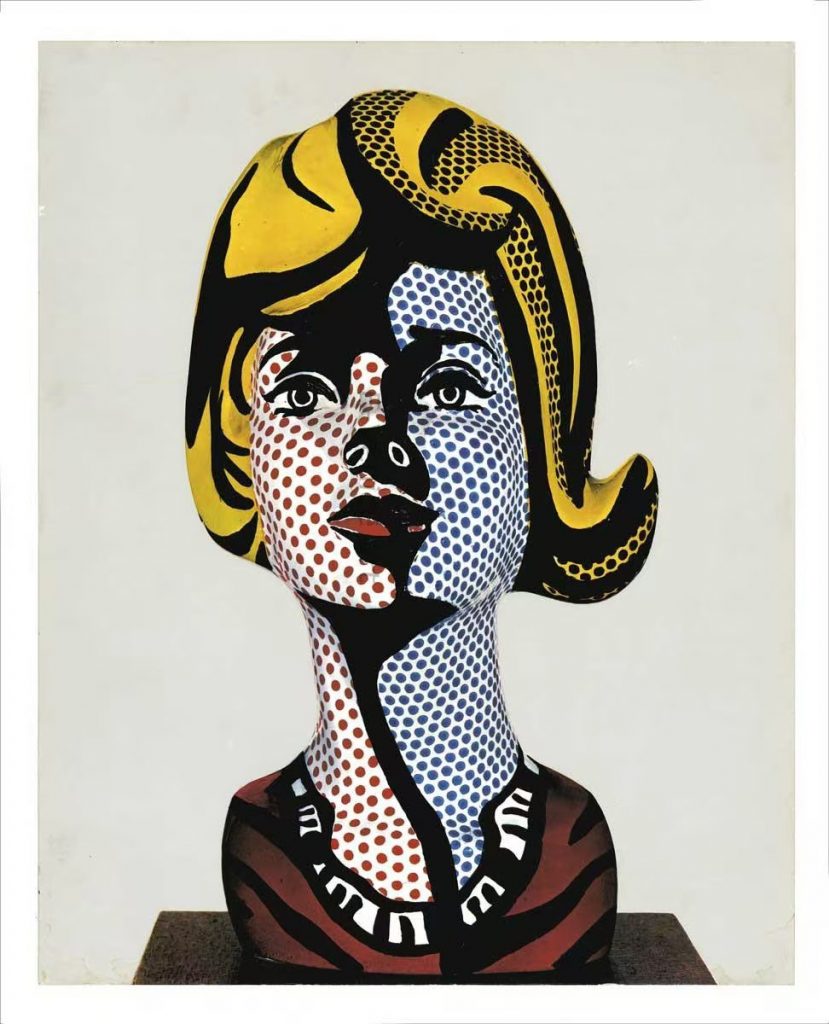
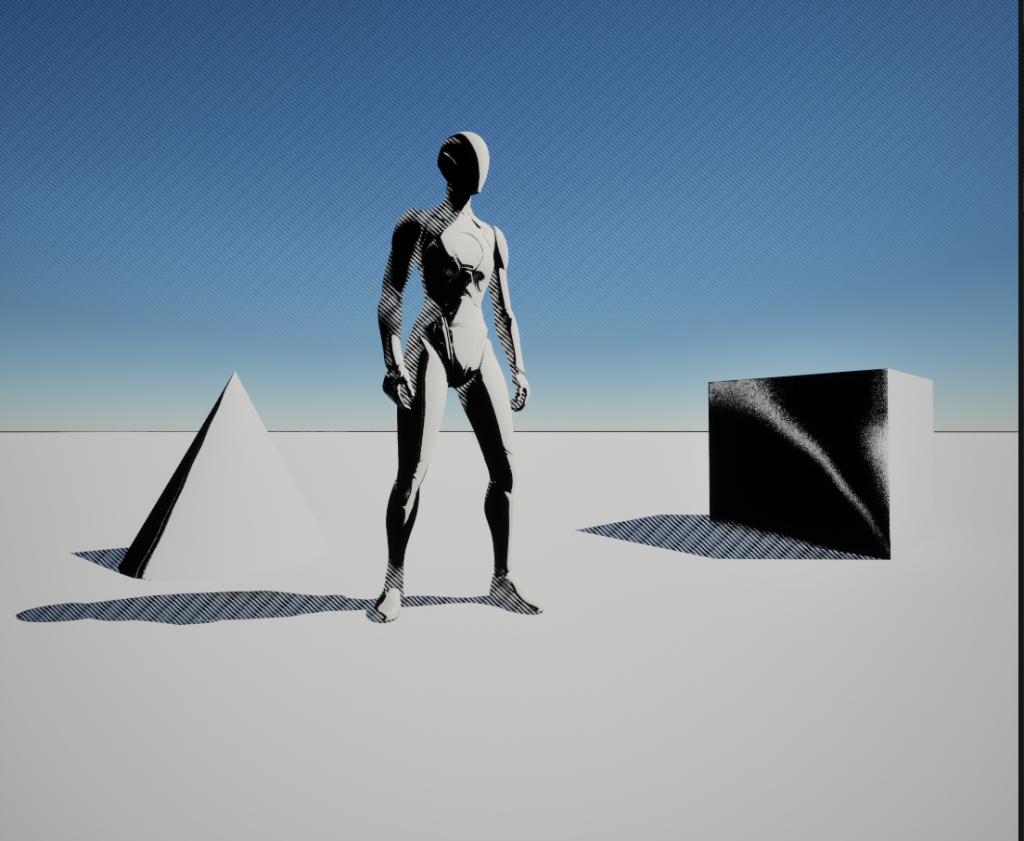
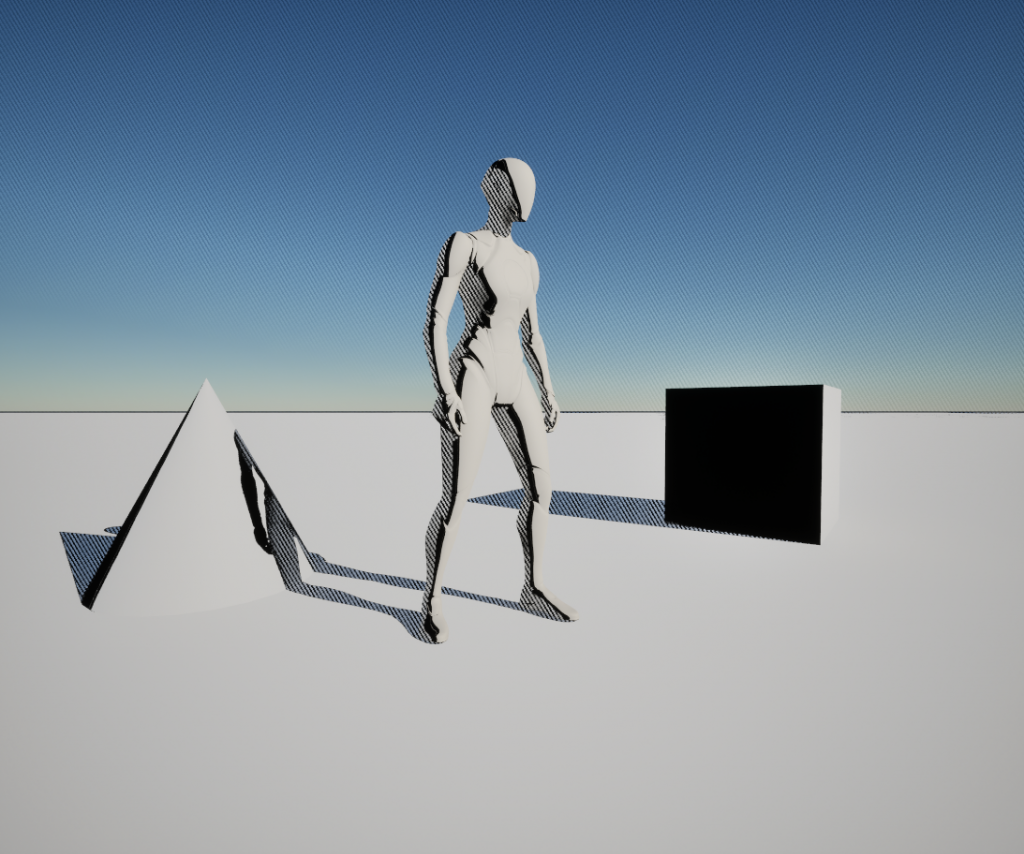
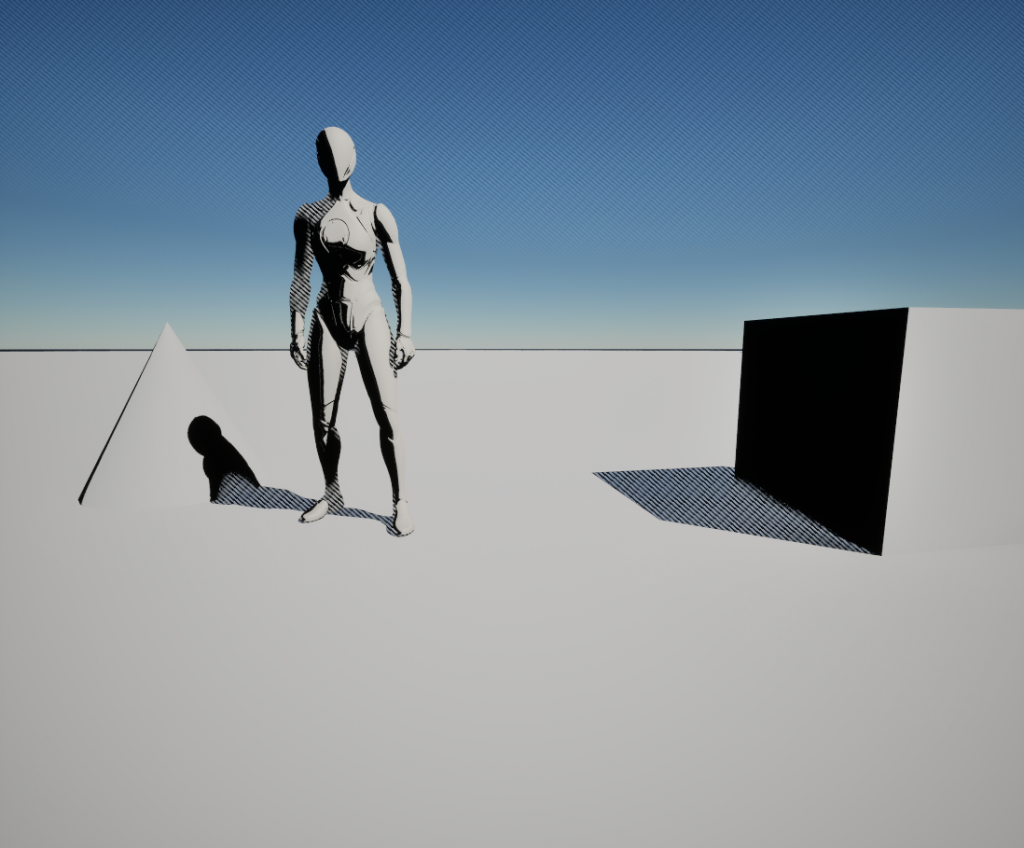
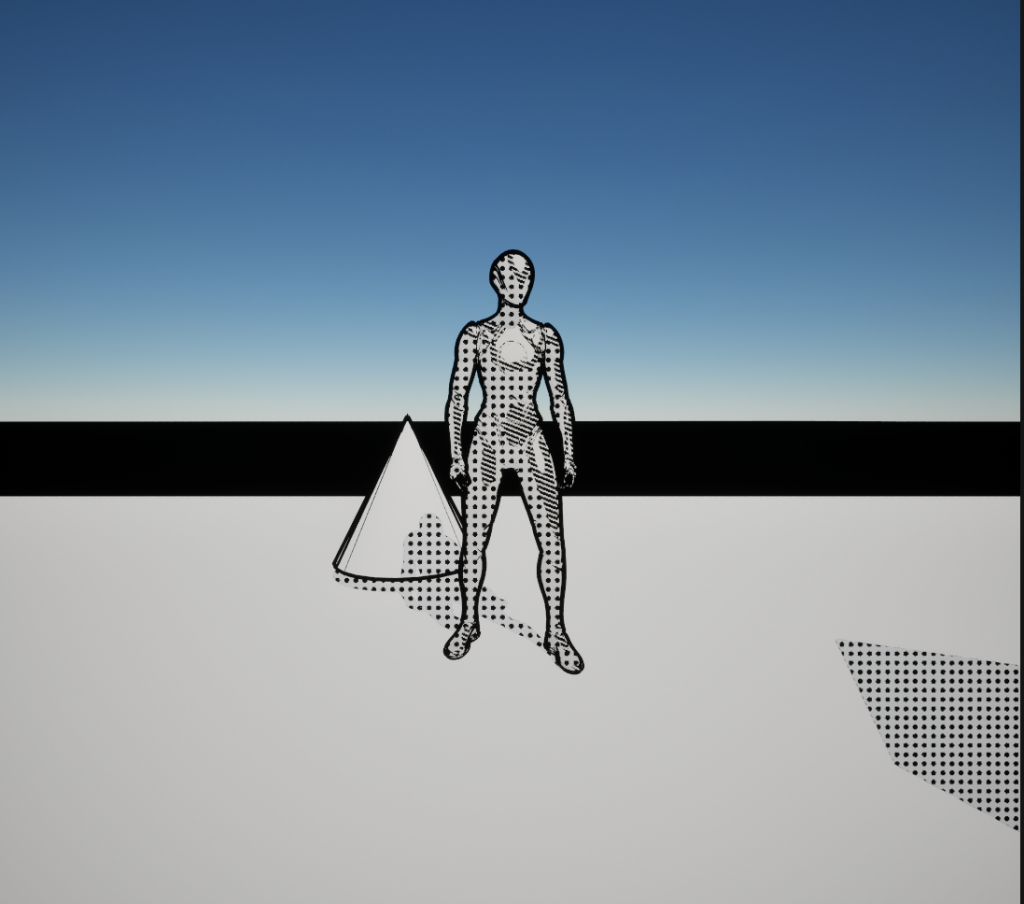
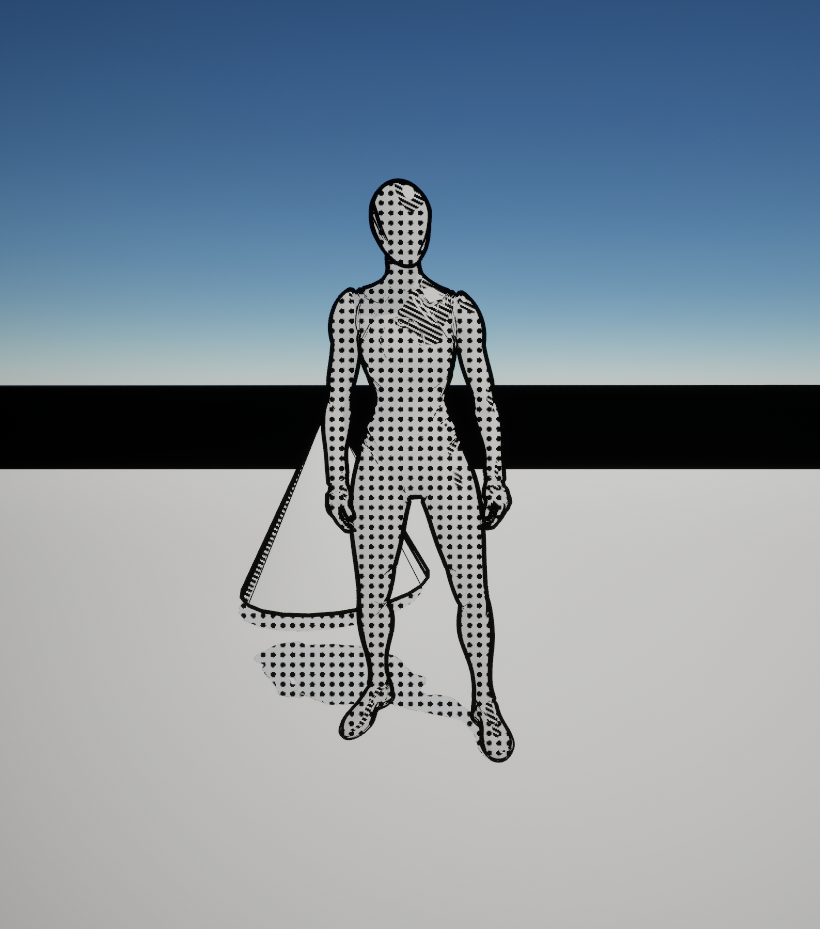
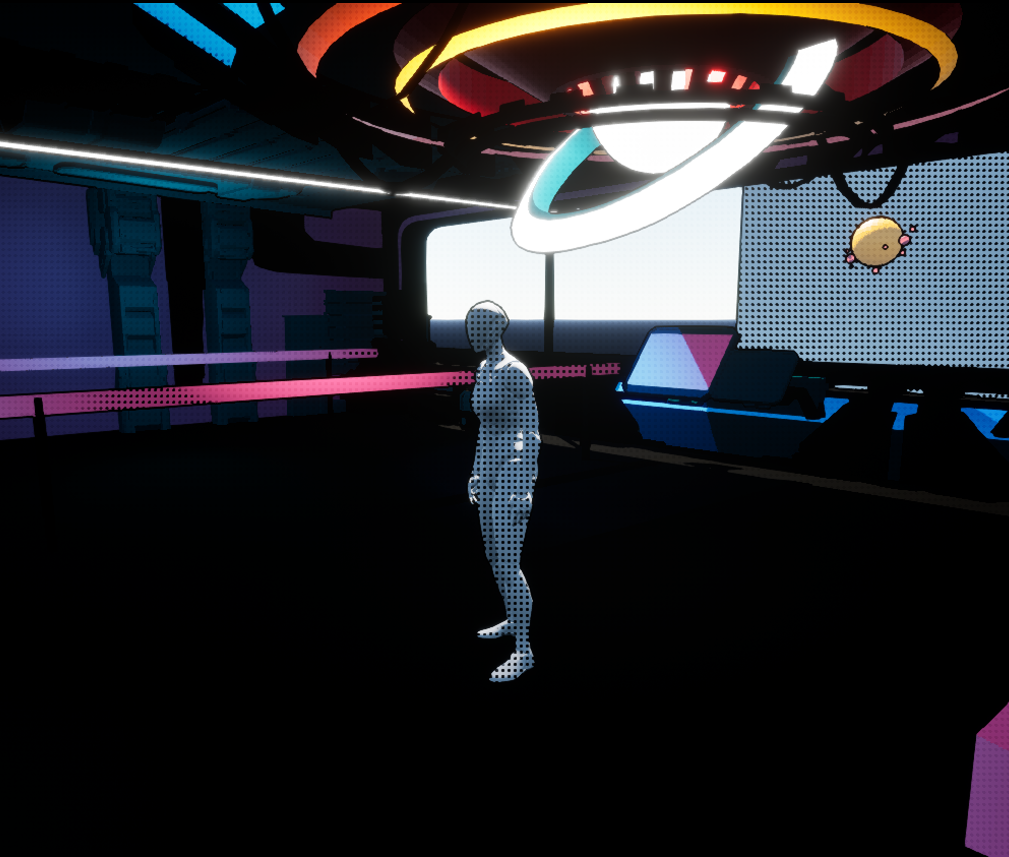
We’ve decided to use a halftone style for this piece, so I started testing post-processing materials in Unreal. However, I ran into an issue with the shadows rendering incorrectly, which still needs to be resolved.
WEEK2 19.01 – 23.01 Project Production Record
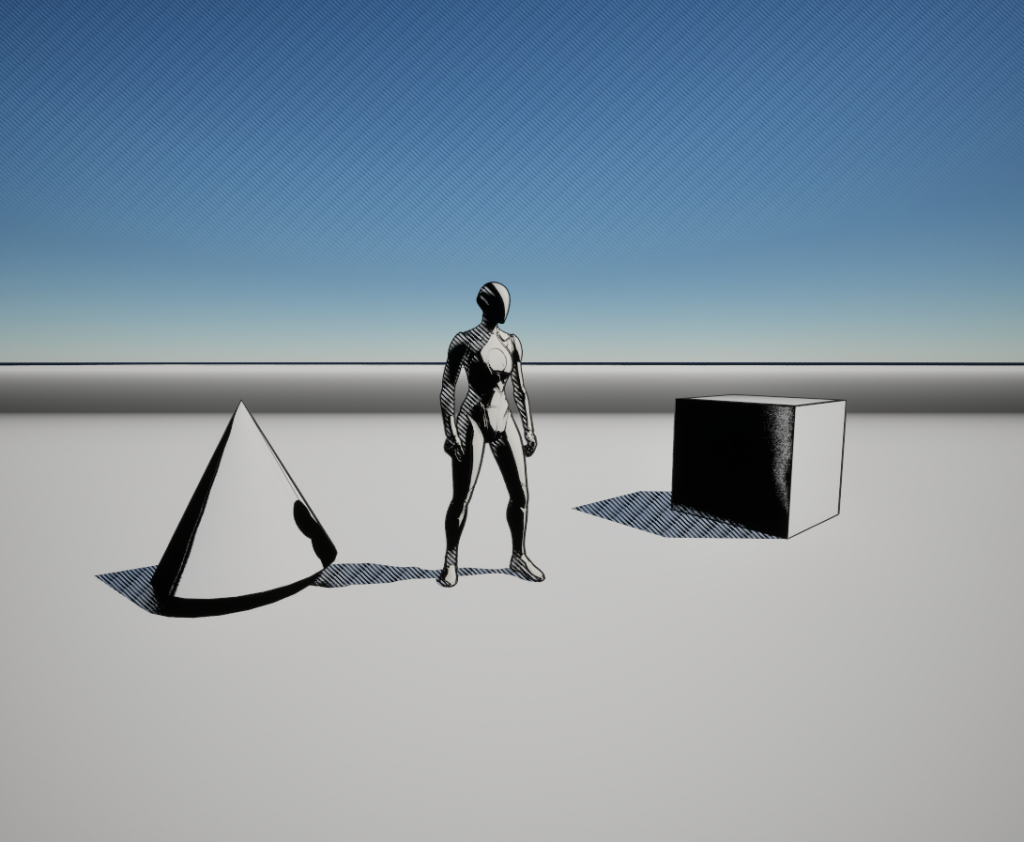
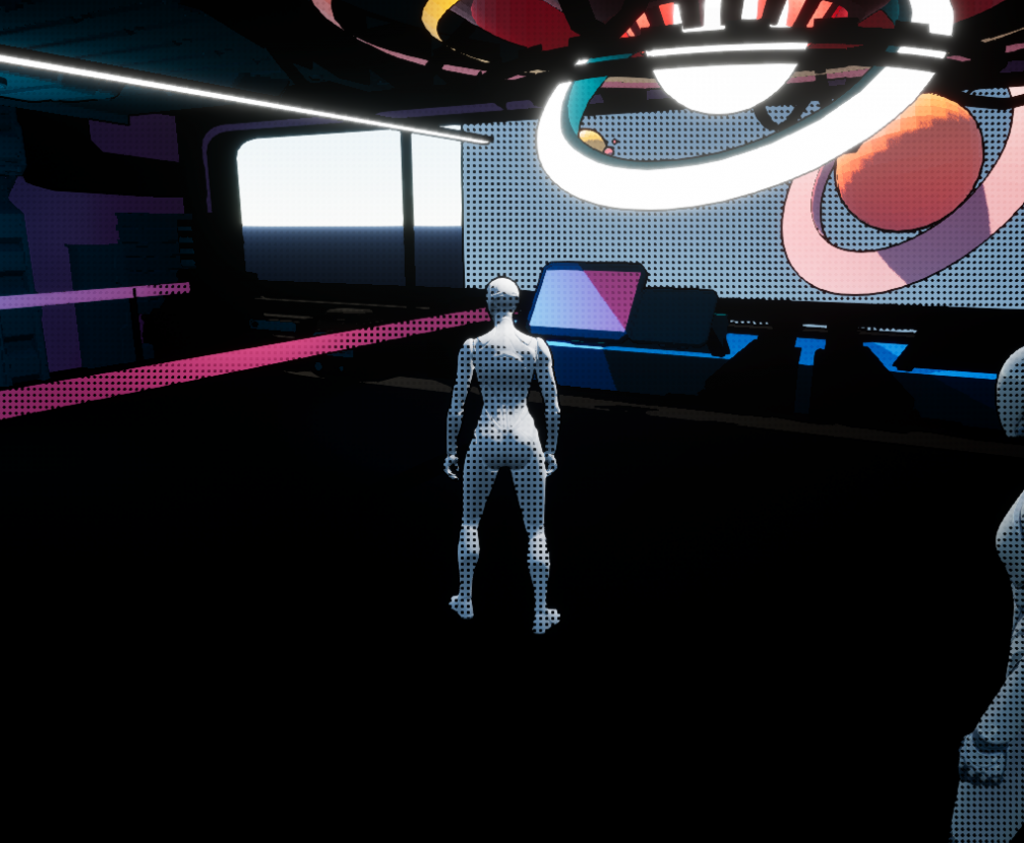
After discussing and confirming the style direction with the team, we decided to add circular halftones and outlines on top of the original diagonal halftones.
WEEK3 26.01 – 30.01 Project Production Record
While waiting for the materials, I also worked with Qianrong Li to research exporting 360 footage from Unreal and stitching it into Premiere. We made sure that the working files handed off to the VFX team could be correctly exported.
WEEK4 02.02 – 06.02 Project Production Record
After receiving the scene model, we imported it into Unreal and began reapplying materials to prepare for the stylization process.
WEEK5 09.02 – 13.02 Project Production Record
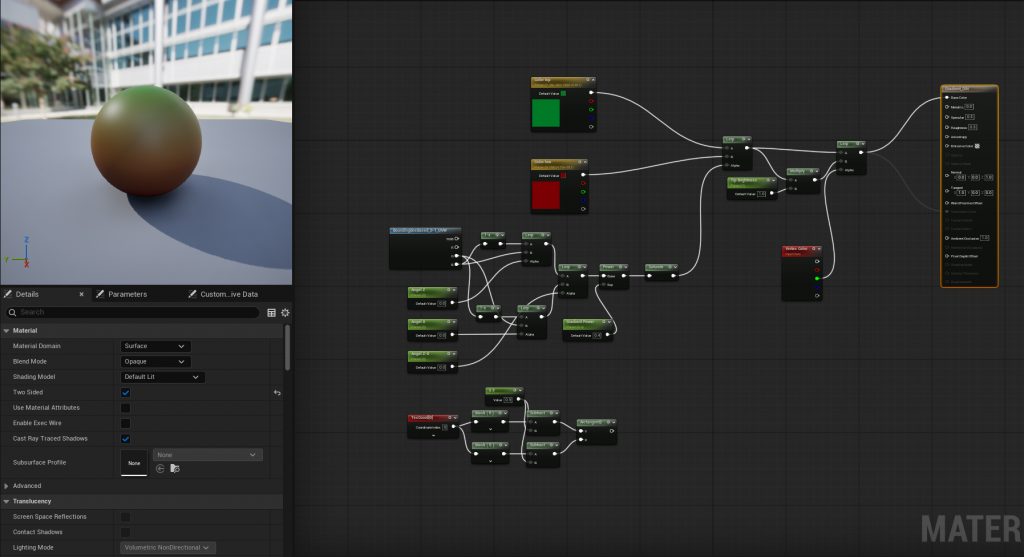
Since we found that standard materials couldn’t achieve the style we wanted, I ended up creating a custom gradient material. Additionally, I reactivated the previous post-processing setup to integrate it with the new changes.
WEEK6 16.02 – 20.02 Project Production Record
I separated the outline into foreground and background layers, allowing independent control over the thickness and threshold of each part.
For the narrative, we added a panoramic projection material. Since the material needs to be set as semi-transparent to create the penetrating radio wave effect, it ended up disabling the depth used for outline rendering. We spent some time discussing this with the teacher, pinpointing the issue, and managed to reopen the depth functionality.
In the first week, I personally came up with two topics that I would be interested in, but both of them were more technical in nature. I wasn’t sure whether they met the course requirements, and they were also quite different from the directions my classmates were taking.
Scene Understanding
I want to research scene understanding for XR experiences, combining real-time 3D scanning with fast AI-based object detection. This approach would allow VR projects to break free from being limited to specific physical locations, such as exhibitions or galleries. Additionally, the more adaptive and responsive the system is to the real-world environment, the stronger the connection it can create between the virtual and the real.
Interactive Ways for Audiences in VR
Although we create a virtual world in VR, it’s still important to ensure that certain elements remain realistic and make sense. This helps the audience understand how to enter and engage with the imagined world we’ve created. I believe that clear guidelines and well-designed interactions are crucial in VR, as they help audiences become more immersed in the experience rather than feeling confused or interrupted.
WEEK2 29.09 – 03.10 Inspiration Idea
After forming a team with Jiaao Huang, we tried to integrate the topics we were interested in and worked out a feasible mechanism for the project.
MR
木棍碰一下就顯現畫面
Covering most of the field of view evokes a sense of horror, and we found that we were both very interested in horror games. We collected several examples of works that utilize obscured vision as references, including films and games.
Horror games use searchlights to explore maps.
fog
Visualize sound/sound waves, blindfold the eyes.
夜魔俠Daredevil
A blind superhero who relies only on hearing in combat.
Camera
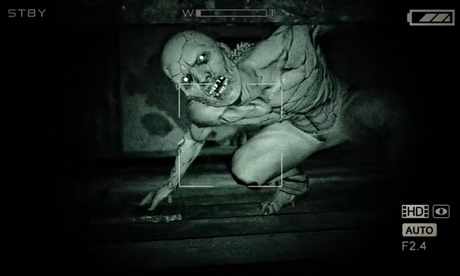
The Outlast Trials
The player has night vision goggles for lighting in the dark, but they consume battery power and require collection.
WEEK3 06.10 – 10.10 Inspiration Idea
We have initially outlined the overall concept of the work, including discussions on gameplay modes, art style, and game settings.
FORM: MR
Mate space setup + Scream understanding
To play in the scene that can grow randomly, and had connect to the real world
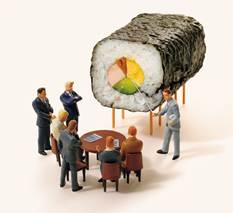
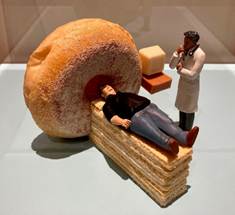
Reference: 田中達也Tatsuya Tanaka
HOW TO PLAY: The image appears when user touches it
Such as Horror game explore the map with a searchlight.
Cover the space by fog or clothes…
Reference: Daredevil
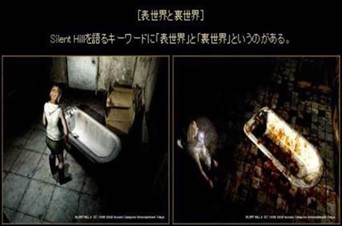
CONTENT: Real world, Inner world and Outer world
Reference: Silent Hill
Inner world is good, while Outer world is terrible
By touching objects with sound waves, user can see the Inner world. (the monsters are in the Outer world)
In the end the world turns into Inner world.
Some tools will put in the Inner world or Outer world, then the user need to get them and solved the mission by crossing two worlds.
The Difference
Object: a desk lamp in the outer world becomes an excavator in the inner world.
Style: objects in the outer world are outlined in black and white, while objects in the inner world are in color.
WEEK4 03.10 – 17.10 Inspiration Idea
We have further refined our ideas in greater detail, including the monsters, story background, and level design.
Game Setting Feature
The forms of objects differ between the two worlds.
Example: A table lamp in the Outer world transforms into an excavator in the Inner world.
The artistic styles of the two worlds also differ.
Example: The Outer world is depicted in a black-and-white outlined style, while the Inner world is rendered in full color.
The Inner world can be perceived when objects come into contact with sound waves.
Tools for puzzle can be placed on specific tables.
Ultimately, the Outer world completely transforms into the Inner world.
TO DO Discuss monsters present or not.
WEEK5 20.10 – 24.10 Inspiration Idea
We have developed an initial plan and vision for the project, and have begun testing features and visual effects in Unity.
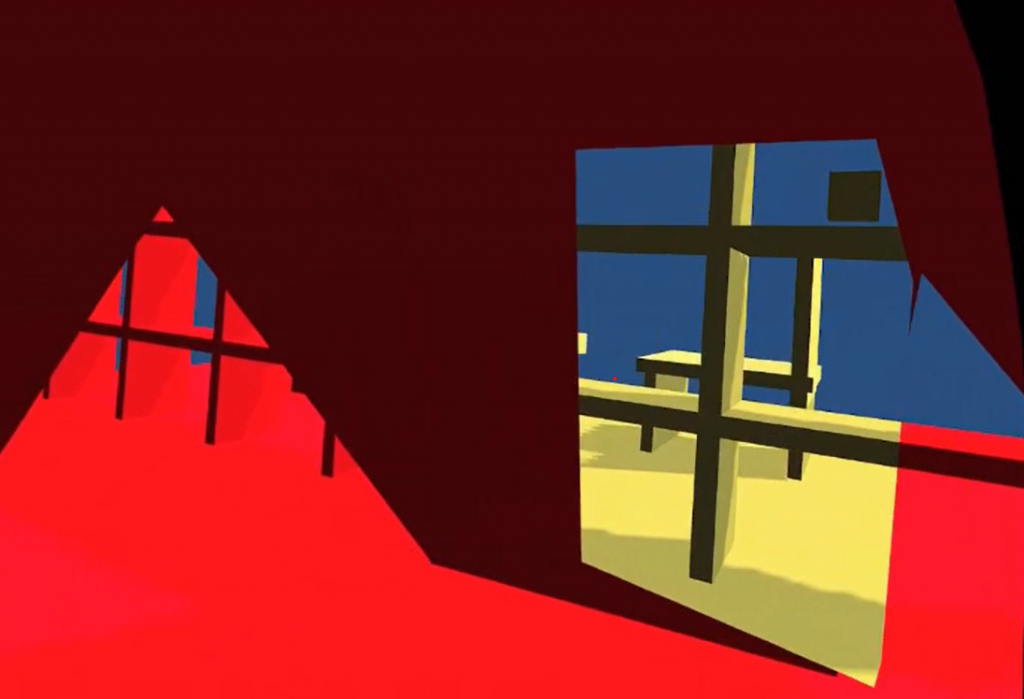
Outer world art style
Inner world art style & material
We hope the Inner World can evoke a warm and cartoony feel, so we experimented with outlined shader materials in Unity.
We gathered some references and attempted to envision the transition style and aesthetic between the two worlds.
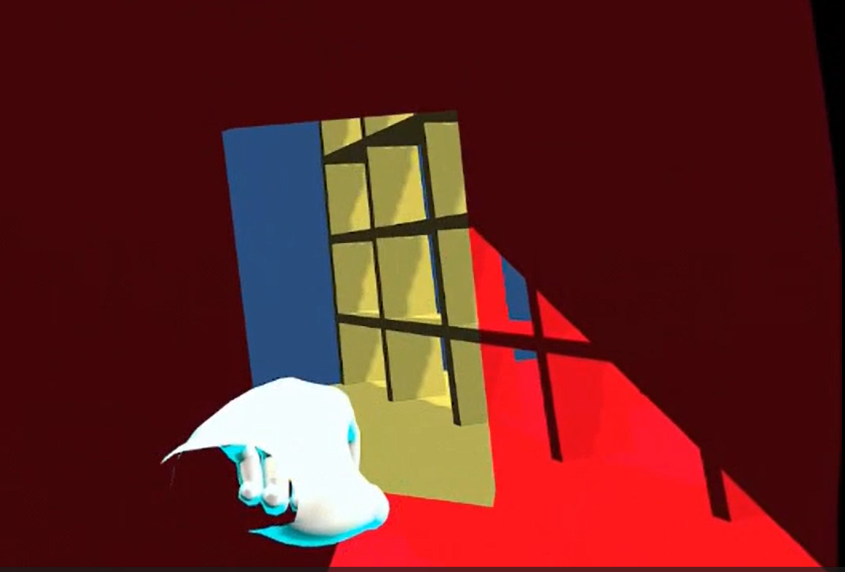
To achieve the effect of viewing different worlds and obtaining items from alternate dimensions, we have chosen portal rendering as the medium and found an open-source implementation on GitHub.
Why the player is there: The player is trapped within their own psychological shadow — a world they’ve sealed themselves inside.
Inspired by The Inner Fence and Silent Hill.
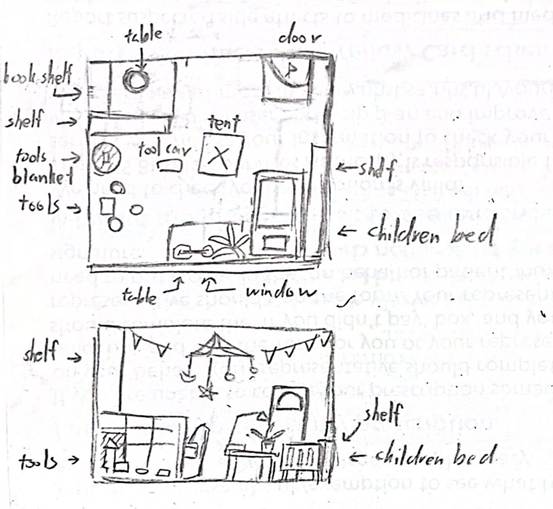
Place: A child’s room. This world manifests from the psychological strain of parents raising — or losing — a child. The hallucinations stem from the conflicting emotions and pressures surrounding birth, death, and guilt.
Gameplay Mechanics
Players collect items and traverse between the outer world and the inner world.
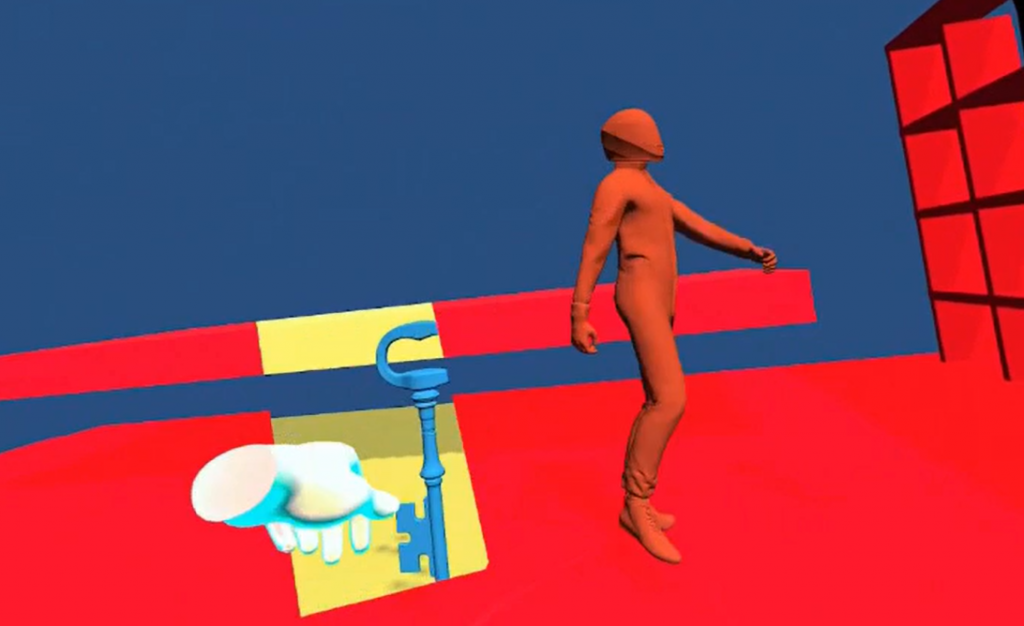
By following monsters and environmental clues, the player must find a key to either enter the inner world or return to reality.
Monster Design
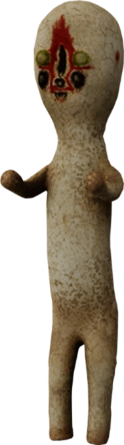
The monsters represent babies — born or unborn. Inspired by the statue SCP-173:
The creature moves, approaches, or guides the player…
But it must always remain within the player’s line of sight.
The monster embodies fear yet paradoxically guides the player toward the key that leads out of the room.
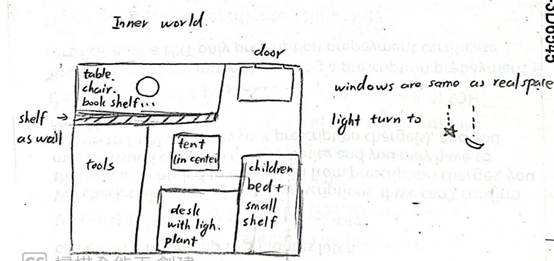
Map Design
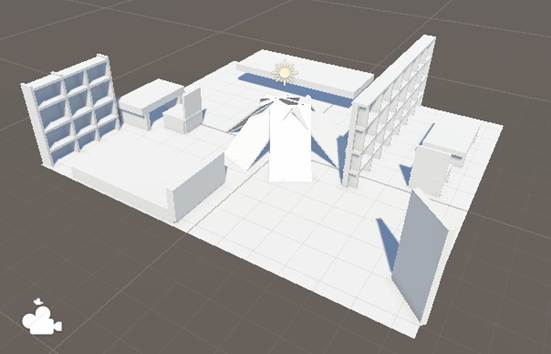
Inner World Map Design
Because the MR feature we use can only create the map using blocks.
other design detail
Windows’ size and position will same as the real space.
Lights’ will stay in the same position as the real space, but the shape will turn into baby mobile.
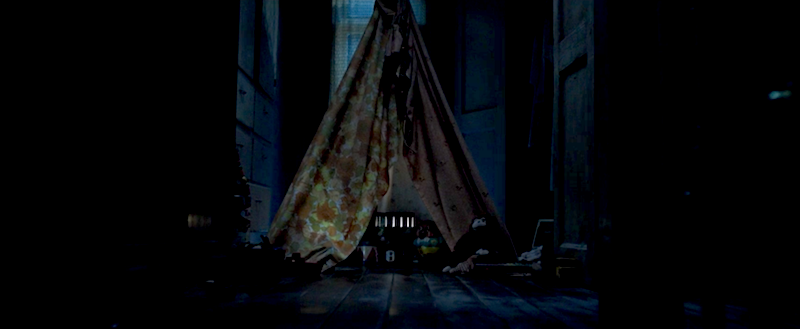
The tent placed at the center will partially obstruct the player’s view, creating a sense of the unknown and a space for hiding that evokes fear.
The ideal map layout for the empty room
WEEK6 27.10 – 31.10 Inspiration Idea
We are attempting to use puzzle design to progressively build a sense of horror. We aim to increase the duration and opportunities for the audience to be near, in contact with, or alone with the monster.
Puzzle Design
The audience must sequentially find the keys.
The first key is on the table.
The second key is inside the tent.
The third key is on the bed in the Inner World or outside the window.
We have chosen two types of outer world scenarios and envisioned what kinds of things and props should appear in them.
After the second discussion with the teacher, we made some changes to the project structure and streamlined the content to ensure we can complete the project within this semester.
TODO
MR for now, let’s wait and focus on VR first.
The portal can stay.
Research Nav Mesh Agent, and set movement speed to zero during observation.
Relative Work
Clock in the wall
One, Two, Three, Wooden Man
Practice in the course
WEEK7 03.11 – 07.11 Project Production Record
We’ve started implementing in Unity and have initially completed the portal render attached to the hand, as well as the monster movement mechanism.
When the monster moves out of the audience’s sight, it will turn and move towards the audience.
Practice in the course
Week8 10.11 – 14.11 Project Production Record
This week, I fine-tuned the monster’s movement system, including the following
Rewriting the script that determines whether the monster is within the line of sight of the player.
When the monster moves, it now avoids the camera to prevent it from moving too close to the user, which could cause the line-of-sight detection to fail.
Initial testing shows that after the player completes a task (such as touching a key), the monster can move to the next task location.
The monster’s movement and idle animations are blended and played using a blend animation system.
WEEK9 17.11 – 21.11 Project Production Record
We’ve updated the content of the puzzle game, aiming to incorporate more elements that will make the game more narrative-driven and offer greater variety in the puzzles. This should help make the gameplay more engaging and immersive, with different outcomes and twists that keep players on their toes.
Find the keys to open the boxes.
Search for scattered puzzle pieces throughout the environment.
Locate the number models in the Inner World and bring them into the Outer World. And must then complete the mathematical equations that appear in the Outer World.
I’ve been researching the special render shader for the portal to avoid issues with texture mapping when switching to new models in the future.
I’ve completed the portal mesh that only appears when it collides with objects, and I also attempted to implement edge feathering. However, this effect is currently only working with a standard shader. It hasn’t had any effect on the portal diffuse object yet. This issue will need to be fixed in the future.
I’ve completed the OVR controller object grab functionality. After grabbing the key, when it touches the keyhole, it will automatically switch to a state indicating that the key has been inserted.
I’ve completed the scattered puzzle mechanism. Now, when the audience performs a specific gesture, they can see the puzzle pieces they’ve collected on their hands, along with their correct positions. Once the audience has collected all the pieces and completed the puzzle, they will be able to view the full image on their hands.
WEEK10 24.11 – 28.11 Project Production Record
A number-based puzzle that allows players to grab number models (from the inner world) and place them into the blanks of a mathematical equation. Players can place and remove the numbers freely. When the placed numbers make the equation valid, the puzzle is cleared, and the numbers can no longer be picked up.
WEEK11 01.12 – 05.12 Prepare for Final Crit
This week, we will integrate the art and programming, making slight adjustments to the size and positioning of objects, etc. After that, we will place the items in their correct positions and shoot a demo video in order.
【1】 The game starts in the corridor outside the door, where you can look around, familiarize yourself with the surroundings, and practice hand movements.
On the left side of the corridor, there is a slightly ajar door. When the player approaches, it will automatically open, and close behind them after they pass through.
【2】 While the player is exploring the room, the monster will appear behind them (with footsteps getting closer and closer). The monster will stop approaching only when the player turns around to face it. After that, it will walk over to the item and begin guiding the player on how to escape.
【3】 The first level is the simplest. The player must grab the key and place it in the keyhole. During this process, the monster will watch the player closely.
【4】 The second level is a puzzle. The puzzle pieces are scattered around the area, and the player must follow the monster to find them and complete the puzzle. During the process of interacting with objects, the player will discover that by touching the surface of certain items, they can see the inner world.
【5】 In this level, the player must reach into the inner world to grab number models, then return to the outer world to complete the mathematical equation.
【6】 In the end, a door leading to the outer world will appear in front of the player. The player can step through it, entering a warmly styled outer world. The monster will also transform back into the appearance of a child.
After the final critique, we received some suggestions, including recommendations for the game’s storyline arrangement, as well as the need to add more references and research.
Fear Progression Timeline
References of horror
【Game】The Outlast Trials
The player can only run and hide in the game, and cannot retaliate against the monsters.
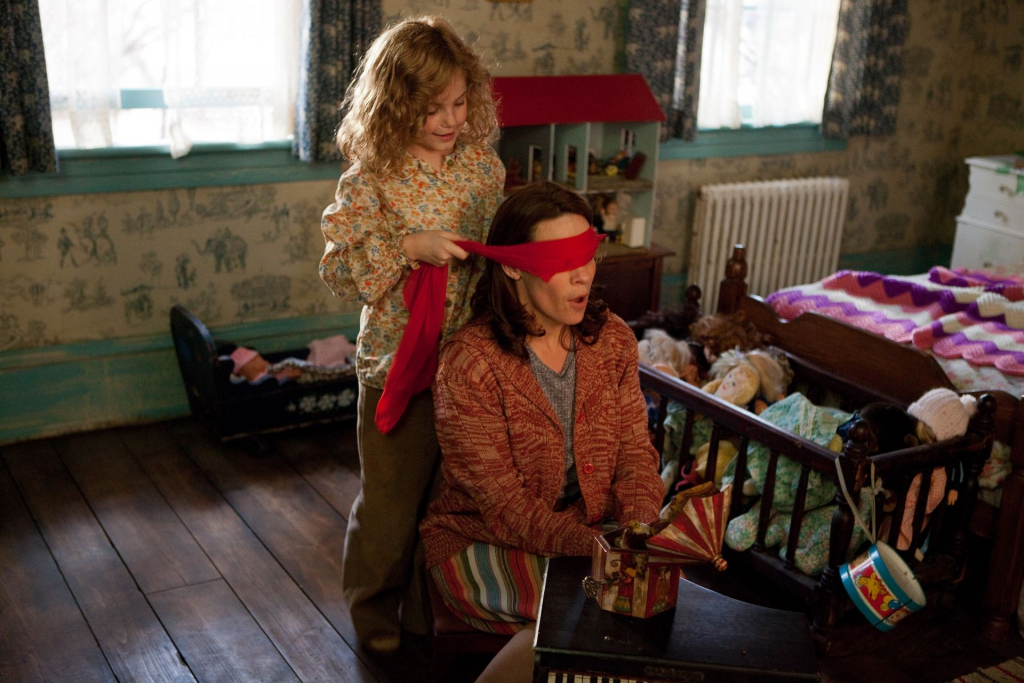
【Movie】Conjuring 1
Linking horror elements with the game of children.
【Movie】Conjuring 2
Children’s furniture (such as tents) combined with horror elements.
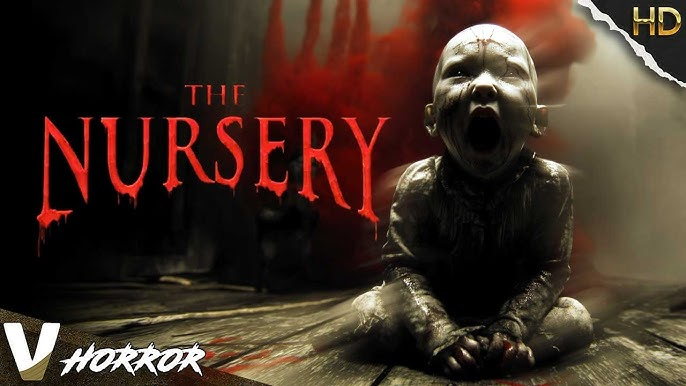
【Movie】The Nursery
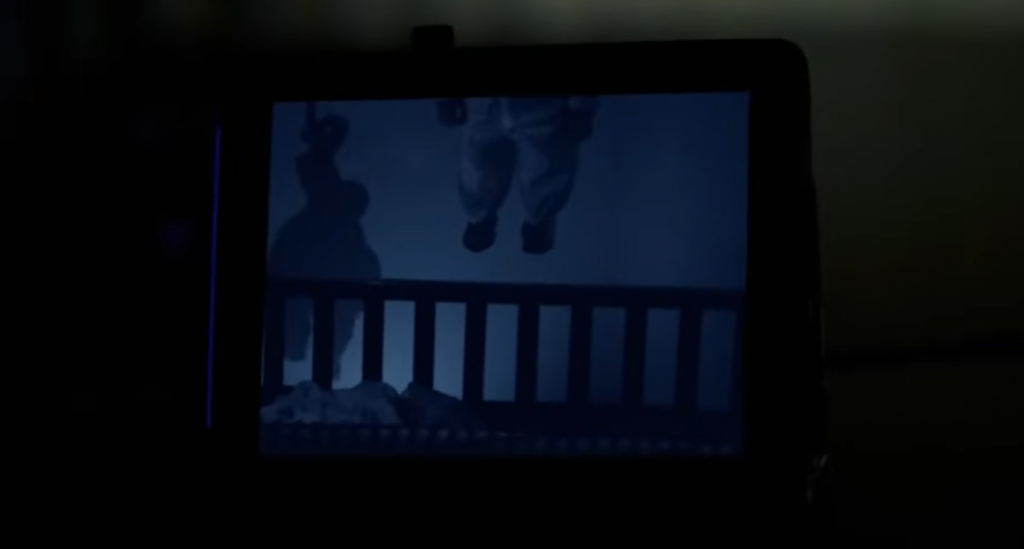
Horror movies related to baby’s rooms, featuring eerie behavior of babies and the terrifying atmosphere within the nursery, can be referenced.
WEEK14 22.12 – 26.12 Game Design Document
We completed the Game Design Document, which gave us a clearer understanding of the overall game structure and helped us identify the core focus of the game.
GAME DESIGN DOCUMENT
Game Name: Baby’s Room
Genre: Horror Puzzle VR Game
Game Elements: While being chased by terrifying monsters, players must solve puzzles and escape from this frightening space.
Players will solve puzzles in a terrifying baby’s room while keeping a close eye on a horrifying monster. If they don’t maintain focus on the creature, it will approach and attack. By watching and following the monster, players will uncover scattered clues within the room. Along the way, they’ll discover that interacting with objects’ surface reveals glimpses of a warmer, more peaceful version of space. Objects can shift between the two contrasting environments, and players must use this mechanic to solve puzzles and progress.
Game Play Outline
Opening the Game Application: The player will appear in the hallway outside the room. A fade-in and fade-out title screen is shown, and there is a partially open room door.
Story Synopsis: After entering the room from the hallway, the player has a brief period to explore the space. Shortly after, a monster will appear. If the player does not keep their eyes on the monster, it will move closer and attack. However, if the player looks at the monster, it will lead them to important clues.
The monster will stand next to a key. The player can grab the key and use it to unlock a nearby lock, obtaining a puzzle piece.
The monster will guide the player to scattered puzzle pieces around the room. After collecting the puzzle pieces, the player can perform a specific hand gesture to reveal a photo of a baby and their parents in their hands. Along the way, the player will also discover that touching objects’ surfaces reveals a warmer, more peaceful version of the room.
The player must touch the surfaces of objects to find numbered models in the peaceful world. After extracting these models, the player places them in the corresponding spots in a math formula, completing the equation.
Game Elements: Need to watch the monster. Solving puzzles: Interacting with objects’ surfaces and shifting some objects between two different spaces (the eerie and the peaceful worlds).
Game Levels: 2 levels – the errie baby’s room and the peaceful baby’s room.
Player’s Controls:
Hand Tracking:
Touching objects’ surfaces to reveal another world.
Grabbing and placing objects.
Special hand gestures to view the completed puzzle image.
Winning: After solving the puzzles, the player can pass through a portal to escape the horrible room.
Losing: The player can be attacked and killed by the monster during the game.
End: After solving the mystery, a portal will appear, allowing the player to leave the room and enter the warmer, peaceful children’s room they had previously glimpsed.
Why is all this fun? The excitement comes from solving puzzles, avoiding the monster, and discovering hidden environments. The game combines tension, exploration, and puzzle-solving to create an engaging experience.
Key Features
Immersive VR Experience
Hand Tracking and Gesture Controls: Players can interact with the environment through hand tracking, allowing for immersive puzzle-solving, object manipulation, and special hand gestures to reveal hidden puzzle pieces.
Monster Mechanic: A unique gameplay mechanic where players must keep their eyes on a terrifying monster. The creature will approach and attack if ignored, but if observed, it will lead the player to vital clues.
Puzzle Solving in Two Worlds: Interact with objects to reveal a second, peaceful world. Objects can shift between the eerie and calm environments, and players must use this mechanic to solve intricate puzzles and uncover hidden secrets.
Horror and Exploration Elements: Navigate a creepy, atmospheric room filled with hidden clues, with the tension of constantly being hunted by a monster. The constant threat of being attacked by the monster, combined with the tension of puzzle-solving under pressure.
Game Flowchart
Player Definition
Health: The player dies when the monster attacks.
Visibility: The player can see the peaceful or eerie room at any moment.
Hand Gestures:
The player uses specific hand gestures
grabbing
middle pinching
Player Properties
Visibility:
When the player touches certain objects in the eerie room, causing a part of peaceful room to be shown.
Changes in visibility impact the puzzles the player can solve and the objects they can interact with.
Hand Gestures:
Grabbing to move the objects and release them while opening the hand.
Middle pinching to see the complete image of puzzles.
Player Rewards
Key: The player picks up the key and uses it to unlock the puzzle piece.
Puzzle Pieces:
Collecting puzzle pieces allows the player to solve puzzles, completing both the picture and the math equation.
The player gathers puzzle pieces by touching or interacting with objects in the room. Once all pieces are collected, the portal to the peaceful room opens.
User Interface (UI)
In our design, we strive to avoid UI elements as much as possible to prevent these from affecting the immersive experience of the game, allowing the player’s experience to feel more authentic.
WEEK15 29.12 – 02.01 Project Production Record
I completed the whole process for the player to experience. However, there was a size issue when testing the entire game. This problem occurred because, during the previous test, I was sitting in a chair while testing.
The room scale is too large, and the furniture is too small. In order for the furniture to look normal, the room needs to be large. However, this may not be feasible in a small space.
If the user’s height fits the hand door, then the desk and bed will be too small.
This make the user not able to play the entire game at the same height or scale.
WEEK16 05.01 – 09.01 Project Production Record
I integrated the final model into the project and completed the recording of the final video, which was then handed over to the team members for voiceover.
As relationships change when growing up, the closest relationships are not always the only ones.(Celebrity, dialogue, reconciliation with the world, mutual growth)
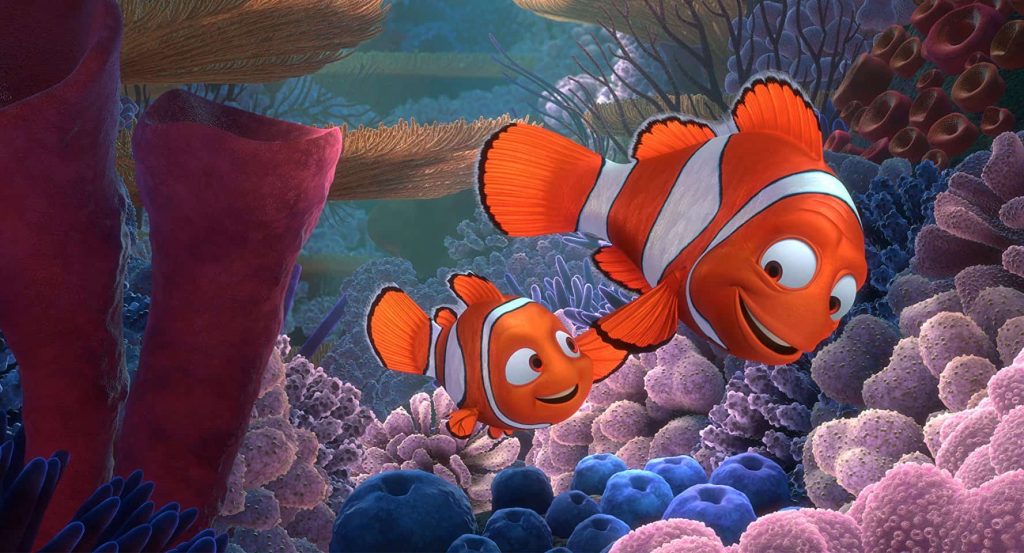
【MOVIE】 Finding Nemo
Father and child growing together. (Overprotective father)
【MOVIE】 The Bold, the Corrupt, and the Beautiful血觀音
Exploitation, family dynamics, disagreement (using, demanding), but still love her. The love comes from wanting to escape, yet even in death, tears are shed.
【MOVIE】 Mask Girl마스크걸
Different ways of loving, but learning reconciliation when growing up.
Personal Experience
Caregiver Personality
The grandmother who only eats vegetables.
The Smoking Grandfather
Reconciling with the fact that family members have a smoking addiction.
The Father Who Stays for the Kids Despite Domestic Violence
A father who stays, despite his violent tendencies, because of his children.
Bitter Melon Soup
A representation of family struggles and relationships.
Death as a form of reconciliation
【SONG】 July 4th
A mother’s mental illness harms her children, yet the song contains affectionate nicknames, showing love despite the pain.
【MOVIE】 A Sun 陽光普照
The comparison between two sons: one commits suicide, the other becomes an accomplice in a murder for his father.
WEEK2 29.09 – 03.10 Inspiration Idea
After further brainstorming and discussion, we each went back and wrote down our ideas for the topic. I used my recent personal experiences as inspiration to imagine the VR project we might create, as well as the VR features we could use to enhance the narrative impact.
Theme Selective sharing of good news while hiding the bad — “white lies” told out of kindness
Event I haven’t told my family about my recent hospitalization. (Reference: Beef)
Emotion A sense of compromise—maintaining surface-level peace. There’s a subtle distance within the family, an unstable balance everyone avoids breaking.
Content
Out of love for our families, we avoid worrying our children or parents, so we learn to evade problems or compromise. No one is willing to be fully honest about the real situation. We love each other in the way we think is best, even if it creates emotional distance.
Example 1
Using VR’s ability to control sensory input to create a sense of dissonance. For instance, what happens visually becomes increasingly bizarre or absurd, yet the audio or other sensory cues present a calm, peaceful atmosphere, or even suggest that everything is improving. This contrast reflects the feeling of “thinking you understand, but actually not,” mirroring how family members often misread or oversimplify each other’s situations.
Example 2
We could also use VR’s immersive yet fundamentally virtual nature. When the audience begins to believe what they see is real, we intentionally break that illusion. Referencing The Line, where early interactions are possible, but when the protagonist is in danger, the audience suddenly cannot interact. They instinctively want to help but are unable to, and this inability forces the realization that everything is virtual.
This mechanic can be used to express the emotional distance within families—people who should be close but, in reality, remain separated by invisible barriers.
WEEK3 06.10 – 10.10 Draft Treatment of Story Idea
We compiled everyone’s ideas and decided to focus on the mother–daughter relationship and a wedding as the main themes of the project.
Through the story, we want to talk about three types of family relationships.
Growing up & Letting go
The tension between love and independence
How families express care
Our story revolves around a wedding, and we believe that when a mother says, “Please take good care of my daughter,” the meaning and associations can shift depending on who she is saying it to. We want to use this idea as a thread that ties the entire narrative together.
Core Concept
A symbolic narrative centered around a dog toy given by a mother to her daughter during childhood. Though everyone knows it’s not a real dog, the entire family treats it as if it were. The dog embodies love, protection, and serves as a symbol of the emotional bond between mother and daughter, a relationship defined by dependence and care, and the eventual journey toward independence.
(we are still discussing dog should be real pet, toy, or mascot costume)
Key Event
At the beginning of the story, the mother gives a “mission” to the dog and says: “Please take good care of my daughter.”
This moment, delivered seriously to the plush dog, sets the tone for a surreal and emotional story.
We want the audience to experience the same period of events by taking on three different roles, and ultimately piece them together into one complete story. However, we’ve encountered difficulties because the content has become too large and challenging to design.
Gameplay Structure
The story unfolds through role-switching mechanics, where the player explores different perspectives. By interacting with others and gathering fragments of memory and emotion, the player uncovers the strange truth behind the dog’s central role in the wedding.
Player Role Progression
Little Girl / Waitstaff (Observers)
Mother (Participant)
Bride (Participant)
Preliminary Story Concept
Recurring Scenes
(the scenes which will repeat when audiences play different roles.)
We are still discussing which one is better.
Mother holding the dog, telling the daughter:“You must take good care of it (the dog).”
During a grand wedding ceremony, after giving her blessing. The mother hands the bride’s hand not to the groom, but to the Shiba Inu dog. The camera then reveals: the groom, bride, and the dog standing together.
Narrative Layers
She mostly speaks to the dog, but her words are clearly meant for her daughter.
Through this, the mother is really saying: “Take care of yourself,” knowing that her daughter will soon face the world independently.
This is a transition of care: the mother, once the protector, now entrusts that role to the symbolic dog (i.e., to the bride herself).
Present Conflict: The mother micromanages the wedding, constantly reminding the bride of what to do next, even replacing the role of the wedding host.
Past Conflict: The family (e.g., grandparents) didn’t allow pets in the house. Despite this, after the daughter received the dog, the whole family eventually treated it with love—just like a real pet.
In the end, the bride realizes: she is the dog herself.
Supplementary Detail
When playing as the little girl, players can experience early mother-daughter dynamics through lessons, conflicts, and nurturing moments—mirroring the evolving relationship shown in the wedding timeline.
Reference Work
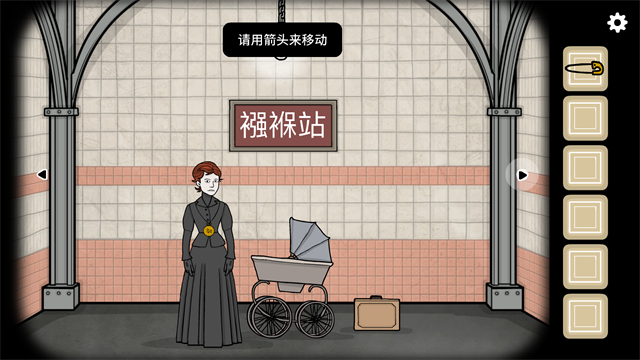
【Game】 Underground Blossom 地鐵繁花
We referenced the female character from the game, using the repetitive technique of repeating the same line to hint at and emphasize the significance of the storyline. This not only creates a sense of suspense but also aims to leave a stronger impression on the audience.
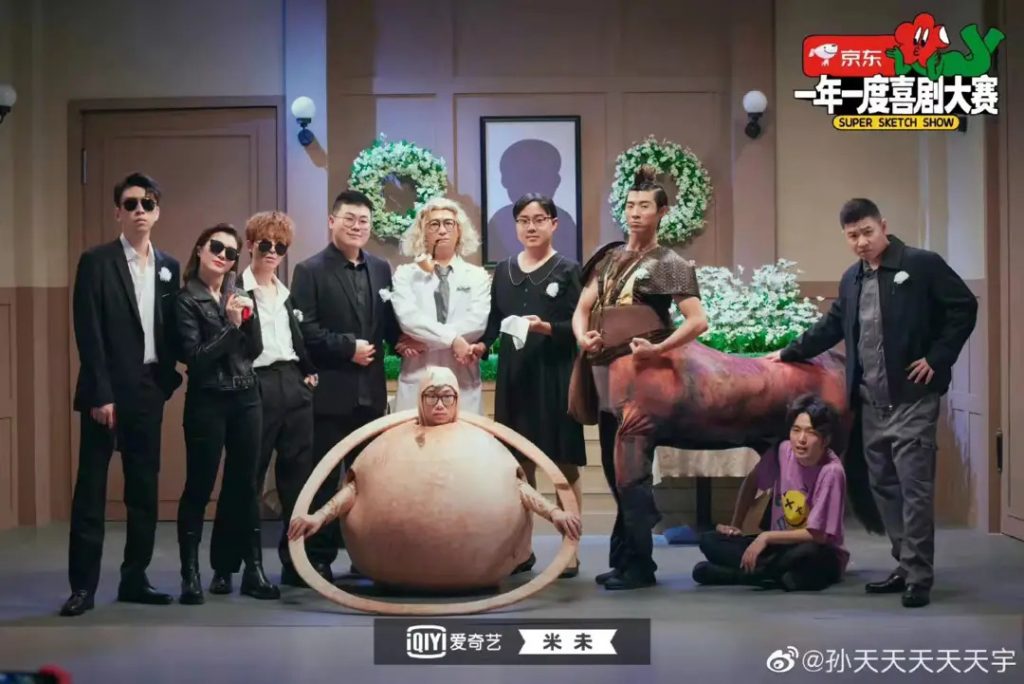
【Short Comedy】 父親的葬禮
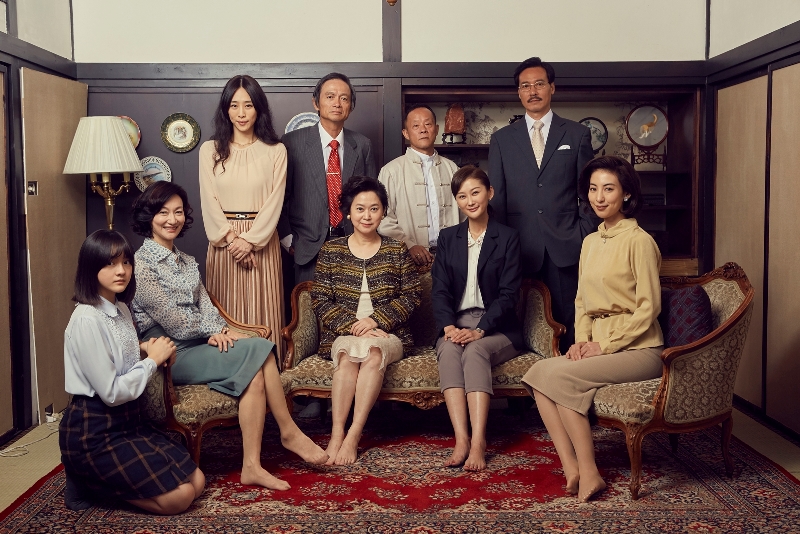
This is a comedy, and we really enjoy the absurd storyline, which describes how many of the father’s strange friends show up at his funeral, leading the son to realize that he never truly understood his father. We’d like to have some absurd events happen at our wedding as well.
WEEK4 03.10 – 17.10 Script Practice
We completed the script writing in class. Even though it’s a different story, it was my first time writing a script. I felt really good about how we tried to define the characters’ personalities and used time, setting, and their appearance and behavior to highlight who they are.
Actors: School bag, Ray, Squirrel
Actor Ray’s detail: 13 years old boy, and an introverted child who tends to overthink
1/ On the Way Home to Living Room
POV: Invited witness (school bag with cartoon eyes)
Time: After school, 17:13 Setting: A gray, overcast day. A small road outside a detached house; a neighbor nearby is loosening the soil.
To reach a consensus during our discussions, we found reference images that helped make Ray’s home more concrete in our planning.
Ray is walking home from school, with the school bag carried on his back. He walks with his head slightly lowered and shoulders slouched, (the camera angle catches his backpack tilting slightly upward). (Viewer’s perspective: facing forward but moving backward.)
Ray reaches the entrance, closes the door, and walks around the house. The house is dark and empty. (A sense of loneliness.)
Ray and tosses the bag (the player) onto the sofa. We see Ray, a slightly hunched boy, wearily taking off his coat. The camera slowly pushes toward Ray, shifting to his point of view.
BLACK FADE IN AND OUT
2/ Ray’s Room
POV: Ray
Ray opens the door
A fluffy belly blocking the doorway, only catching glimpses of the room’s corners through the narrow gap.
The camera follows Ray as he slowly tilts his head upward — There stands a huge, bedraggled squirrel, head lowered, squeezed into the room.
Squirrel
“…hello?”
WEEK5 20.10 – 24.10 Draft of story Treatment
After our tutorial with the teacher, we revisited our concept and discussed the story ideas again. We streamlined the narrative to focus on the core theme we wanted to explore—“the mother–daughter relationship”—and removed unnecessary characters and plot elements.
TITLE: 囍宴 THE WEDDING
POV: The Dog
Story Summary
I am a dog. The two women I love most — the bride, and my “owner,” the bride’s mother — are waging a long and exhausting “war” over something called a “wedding.”
Act One: The Preparation — “It’s For Your Own Good”
The war began the very first day of wedding planning.
First Conflict Point: The Wedding Dress
When confirming the wedding dress, the mother tells the bride:
Version 1:
“I think this one looks better on you — it’s more energetic.” “This is one of the most important days of your life. I think you look best in this one.” (Mother interferes with her daughter’s choices — symbolizing her control over her daughter’s life decisions.)
Version 2:
“If you dress like that, what will people think?” “I’m not getting married for other people to see.” “If not for others to see, then why get married at all?”
A fast-paced and high-energy beat, with recurring imagery hinting at an ongoing, relentless conflict.
Other Conflict Points:The invitations, the ceremony flow……
A quick montage of scenes — the mother’s voice overlaps again and again: “I’m doing this for your own good…” “Listen to me.” “A perfect wedding.” “I just want your wedding to be perfect.”
At this moment, everything suddenly calms down, like the final stage of an argument where the two people fall into a silent cold war. In the eerie stillness, the scene fades out, transitioning to the next chapter.
Last Conflict Point:The Bridesmaids
While reviewing the wedding process, the mother finds out one of the bridesmaids, the bride’s sister, has been divorced. She insists on replacing her, thinking it’s “unlucky.”
Act Two: The Wedding Day
As the bride greets guests, she meets a little girl — her young cousin — who runs around mischievously. The bride greets her, but the shy girl runs off to play with me. Her mother shouts after her, “Can you behave today? Stop running around!” The little girl replies, “Got it!” but doesn’t turn back, hugging me as she runs off.
(This sequence shows the layout of the wedding venue.)
The little girl runs around with me and accidentally finds a black wedding dress hidden in the bride’s dressing room.
“I think the bride is so beautiful!” “It’s my cousin’s wedding today. She looks like a real princess; she’s wearing such a beautiful dress. I wish I could wear a dress like that too.”
When the ceremony begins, the girl sneaks back to see the bride. Her mother doesn’t scold her this time — she just wipes the sweat from her forehead.
“I don’t need anyone to take care of me. I’m already nine — I’m a grown-up!” “Guess what I found?” The girl wipes off her own sweat, proud and defiant.
We use the interaction between the little girl and her mother to present another form of mother-daughter relationship, while also subtly hinting at the bond between the bride and her own mother. This reflects memories from the bride’s childhood that are not explicitly mentioned in the story.
At the Toast Session: The bride’s mother says to the groom,
“I’ve raised my daughter with such care; please take good care of her from now on.”
A drunken relative from the bride’s side slaps the groom’s shoulder, laughing loudly:
“If the bride doesn’t listen to you, you’d better teach her a lesson!”
We used the drunken relative instead of having the mother say this line because we wanted to preserve the mother’s original respect for her daughter, while also introducing conflict.
The mother tries to smooth things over politely, but the bride suddenly puts down her glass — the sharp clink silences the room.
She glances at her stunned parents, lifts her skirt, and walks out of the banquet hall.
In the awkward silence that follows, the little girl blurts out:
“Yeah! We can take care of ourselves! We don’t have to listen to anyone!”
Laughter fills the background, but the words hang in the air.
We also have the little girl express the bride’s feelings, presenting it in a humorous, non-awkward way. By using this shift in perspective, we enhance the audience’s impression of the line and its associations.
Act Three: Reconciliation
The mother hears what the little girl said — and watches how she and her own mother interact: There’s discipline, but also warmth. They share what they love, talk freely. For the first time, the mother understands a different way of being together.
Amid the heavy silence, she stands frozen, face pale. I run up and nudge her hand with my nose, whining softly. She seems to wake up, murmuring:
“We… we should go check on her.” “But I don’t even know what to say…”
I run to the bride’s dressing room and find the wedding dress the bride originally wanted. I bark to get the mother’s attention. She notices, picks up the dress, and heads to her daughter.
We wanted to add an interactive element here, so that the audience feels like they’re helping the bride and her mother, actively participating in their story and repairing their relationship.
From afar, I watch — I can’t hear what they’re saying, but I see the bride in front of the mirror, silently crying. The mother approaches — no lecturing this time — and hands her the dress.
The bride looks up at her, then hugs her tightly.
Act Four: Return to the Wedding
When the bride and her mother return to the hall, the bride is wearing the wedding dress she truly loves.
The guests fall silent for a heartbeat — then erupt into applause, louder and more heartfelt than before.
Epilogue: Farewell, and a New Beginning
The wedding ends not in perfection, but in something more real — relaxed and joyful.
As the guests leave one by one, the bride hugs her mother — and me — tightly.
“I’m going now.”
She gets into the car and drives off with the groom.
The mother holds me in her arms, standing still for a long time. I whimper softly.
She pats my head and says, “Come on. Let’s go home.”
We took the teacher’s suggestion here, where after the bride leaves, the bride’s mother and the puppy remain. But we added the line “Come on. Let’s go home.” to make the farewell feel less like a simple parting, and more like two people heading in different directions, each moving forward on their own path.
Although this is not a formal script format, completing this draft has helped us gain a clearer understanding of what our story should be like.
WEEK6 27.10 – 31.10 Scene Framing
We completed the framing for Scene 1 and Scene 2. The first scene takes place in a clothing store, while in the second scene, we tried using a montage technique to depict ongoing and repeated conflicts.
Perspective & Character Color Guide
Dog (POV, Pug, Pale gray-yellow paws with dark, velvety pads, is able to move / paw / pick with mouth)
We’ve roughly outlined the possible interactive functions and effects that users can have in the storyline.
The Bride’s Mother
The Bride
(The Little Girl)
(The Mother of Little Girl)
We’re unsure whether we should add these characters here, as their screen time in the story won’t be much. We’re concerned that adding too many characters might make the script look too complicated.
FADE FROM BLACK WITH SHAPE OF DOG’S EYES
1/. INT. Bridal shop – DAY
You are a dog. Who raised by two women you love most — the Bride, and the Bride’s Mother.
This section is meant to provide the story background, so that those reading the script can quickly understand our story. However, it will not be included in the VR presentation.
The Bride steps out of the fitting room, having just changed into her wedding dress. She twirls once in front of you.
THE BRIDE
(excited, to dog)
What do you think? Isn’t this black wedding dress beautiful? This is the one I really want. Now we just wait for Mom to come.
The Bride crouches down to play with you, picking up a leftover flower stem from the bouquet-making table and tossing it for you to fetch.
The Bride throws it onto the floor — you need to pick it up gently in its mouth and bring it back.
This part is like an interactive tutorial, preparing the user for the upcoming storyline experience. Rather than using text or icon-based prompts, we want the tutorial to be integrated into the narrative, making it feel natural and seamless. So, when the user isn’t sure what to do, the bride will continuously guide them with verbal cues, such as “Quick, pick that up for me.”
The Bride tosses it into a narrow gap — you first use your paw to pull it out, then pick it up with your mouth and trots back.
The Bride pets your head.
BRIDE
(excited, to dog)
Good boy. Such a good dog.
The Bride keeps playing with you, then softly says:
BRIDE
(worried, to dog)
How can I make Mom agree to this dress? I know she won’t like it… but I still want to try.
SOUND of DOOR OPENING
In addition to the voice cues, the bride will also turn her head towards the door, guiding the audience’s gaze to the entrance where the mother appears.
The Bride’s Mother enters the room. She is placing her bag down, still half talking as she looks around.
THE BRIDE’S MOTHER
How’s it going? All good? Found something you like?
THE BRIDE
I did… What do you think of this one?
(you are siting a little behind the bride, looking curiously at the mother.)
The Bride spins around to show the dress. Her Mother’s smile fades — her tone sharp, disapproving.
THE BRIDE’S MOTHER
(unhappy, strong)
You call that a wedding dress? Who even makes something like this nowadays?
The Bride’s Mother grabs the Bride’s arm, pulling her around, and a little closer, eyes scanning up and down with a frown.
The edge of the dress brushes against you; you startled and steps back.
BRIDE
I searched for so long to find this one. It’s really special — I love it! You know, the design style is—
THE BRIDE’S MOTHER
(cutting the Bride off, angry)
If you dress like that, what will people think?
BRIDE
I’m not getting married for other people to see.
THE BRIDE’S MOTHER
If not for others to see, then why get married at all?
We based this dialogue on a line from Ang Lee’s film The Wedding Banquet, attempting to portray the conflict between self-identity and traditional culture, while connecting it to the different perspectives held by the mother and daughter due to the generational gap
We want to switch the shots, but we haven’t come up with many ideas for transitions specific to VR media yet, so we’ve mostly used cuts as placeholders. We hope to have more time later to revisit and work on this part.
CUT
The Bride stands in her white wedding dress, looking a little dejected.
2/. INT. VOID – MONTAGE
The Bride’s Mother walks toward you and picks you up.
We want to guide the audience’s movement, so we designed the scene where the mother picks up the dog, making the camera movement feel more natural and purposeful.
The Bride appears, dressed in a white wedding gown.
The Bride’s Mother nods in satisfaction.
THE BRIDE’S MOTHER
Now this — this looks like a real bride.
BEGIN MONTAGE
The Bride’s Mother turns and walks to the right. As she moves, different scene elements draw near and fade behind her one by one. Her clothes change as she walks. Spotlights flicker on and off, illuminating each moment before fading to darkness again.
In the montage section, we really weren’t sure how to express it because the images we envisioned were abstract and didn’t follow the narrative logic. We didn’t know how to describe it with words, so we could only write down the general events we wanted to convey.
SCENE 1 — THE DISHES Symbolic dishes appear on the original one — pork knuckle, Eight-Treasure Duck. And the number of dishes changing from odd to even.
SCENE 2 — THE INVITATION What was once a digital invitation transforms into a bright red, physical wedding card.
SCENE 3 — THE OFFICIANT The pastor disappears, replaced by a lively wedding host.
SCENE 4 — THE MUSIC The soundtrack shifts from English pop songs to traditional Chinese music.
BACKGOUND MUSIC CHANGE
TITLE PAGE IN:
囍宴THE WEDDING
The fade-in here not only marks the end of the montage and gives the audience a moment to breathe, but also connects to the next scene, the wedding venue.
WEEK7 03.11 – 07.11 Aesthetica Short Film Festival
My team of four and I went to the 2025 Aesthetica Short Film Festival in York. Besides watching the films and attending the talks, it was also our first time visiting a place outside of London. We got to see different landscapes and experience a new vibe.
In the various speach, I heard a lot about the career ecosystem related to new media and future planning. There were also fresh insights into VR and new media, along with practical VFX techniques, workflow, and details.
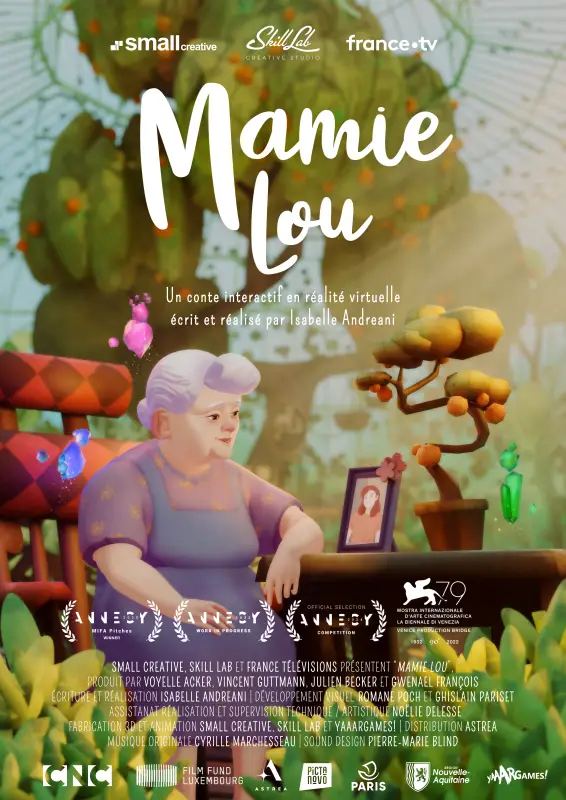
And I also watched the work Nana Lou (the Official Short Film Competition at the 2024 Annecy International Animation Film Festival), and I really appreciated the way it handled memories. When we were discussing The Wedding, we tried to avoid using clichés when depicting memories, but in Nana Lou, the way memories were triggered through interactions with different objects felt very effective and impactful.
WEEK8 10.11 – 14.11 Draft of Script
Perspective & Character Color Guide
多多 TOTO (POV, Pug, Pale gray-yellow paws with dark, velvety pads, is able to move / paw / pick with mouth)
晓霞 Xia(The Bride’s Mother)
怡萱/萱萱 Xuan Xuan (The Bride)
子涵/涵涵 Han Han (The Little Girl)
The Mother of Little Girl
The Photographer
The Host
We’ve finished the script, so now we’re clearer on which characters we need. We’ve given most of the actors names, which not only strengthens their identities but also makes them easier to recognize.
FADE FROM BLACK WITH SHAPE OF DOG’S EYES
1/. INT. Bridal shop – DAY
You are a dog, raised by the two women you love most — the Bride, and the Bride’s Mother. You look around; it seems to be the fitting area of a bridal shop. You hear a woman’s voice.
THE BRIDE
Toto, come here! Come to me.
That’s your owner, Xuan Xuan, the bride who is about to get married. You follow her a few steps to the door of a fitting room. Seeing you come over, she fondly pats your head.
In this interactive tutorial, we not only use verbal guidance, but also have the bride perform certain actions visually, adding more cues to help guide the user.
THE BRIDE
Good dog, good dog. Come on, give me your paw.
You see the Bride holding a black wedding dress in her arms. She frees one hand and gestures for you to shake. You can lift your paw to shake with her. You see the Bride smiling happily.
THE BRIDE
I think this is the one! Be a good pup and wait for me here, okay?
The Bride goes into the fitting room. You wait for her at the door. You look around and see the layout of the fitting area: besides a few fitting rooms, there is also a display pedestal and a large mirror.
The Bride steps out of the fitting room, having just changed into her wedding dress. She twirls once in front of you.
THE BRIDE
(excited, to dog)
What do you think? Isn’t this black wedding dress beautiful? This is the one I really want. Now we just wait for Mom to come.
As the Bride talks, she steps onto the display pedestal and looks at herself in the big mirror of the fitting area, lifting her black skirt and excitedly checking herself from different angles, nodding in satisfaction. Then the Bride crouches down to play with you, picking up a leftover flower stem from the bouquet-making table and tossing it for you to fetch.
The Bride throws it onto the floor — you need to pick it up gently in its mouth and bring it back.
The Bride tosses it into a narrow gap — you first use your paw to pull it out, then pick it up with your mouth and trots back.
The Bride pets your head.
BRIDE
(excited, to dog)
Good boy. Such a good dog.
The Bride keeps playing with you, then softly says:
BRIDE
(worried, to dog)
How can I make Mom agree to this dress? I know she won’t like it… but I still want to try.
SOUND of DOOR OPENING
The Bride’s Mother enters the room. She is placing her bag down, still half talking as she looks around.
THE BRIDE’S MOTHER
How’s it going? All good? Found something you like?
THE BRIDE
I did… What do you think of this one?
(you are siting a little behind the bride, looking curiously at the mother.)
The Bride spins around to show the dress. Her Mother’s smile fades — her tone sharp, disapproving.
THE BRIDE’S MOTHER
(unhappy, strong)
You call that a wedding dress? Who even makes something like this nowadays?
The Bride’s Mother grabs the Bride’s arm, pulling her around, and a little closer, eyes scanning up and down with a frown.
The edge of the dress brushes against you; you startled and steps back.
BRIDE
I searched for so long to find this one. It’s really special — I love it! You know, the design style is—
THE BRIDE’S MOTHER
(cutting the Bride off, angry)
If you dress like that, what will people think?
BRIDE
I’m not getting married for other people to see.
THE BRIDE’S MOTHER
If not for others to see, then why get married at all?
CUT
The Bride, now changed into a white wedding dress, walks out of the fitting room, looking a little dejected.
2/. INT. VOID – MONTAGE
The Bride’s Mother walks toward you and picks you up.
The Bride, dressed in a white wedding gown, steps onto the display pedestal, facing her mother instead of the mirror.The Bride’s Mother nods in satisfaction.
THE BRIDE’S MOTHER
Now this — this looks like a real bride.
BEGIN MONTAGE
From your POV in the Bride’s Mother’s arms, the Bride’s Mother turns and walks to the right. As she moves, different scene elements draw near and fade behind her one by one. Her clothes change as she walks. Spotlights flicker on and off, illuminating each moment before fading to darkness again.
SCENE 1 — THE DISHES The Bride stands beside a dining table, showing the banquet dishes she has chosen. From your POV in the Bride’s Mother’s arms, you see the Bride’s Mother raise her hand and point. Symbolic dishes appear on the original set — pork knuckle, Eight-Treasure Duck — and the total number of dishes changes from odd to even.
SCENE 2 — THE INVITATION The Bride holds up her phone, showing off a creative digital wedding invitation. Again, you see the Bride’s Mother raise her hand and point; the phone in the Bride’s hand transforms into a bright red, physical wedding card.
SCENE 3 — THE OFFICIANT The Bride introduces the pastor she has invited. Once more, you see the Bride’s Mother raise her hand and point. The pastor disappears, replaced by a lively wedding host full of flowery, formal phrases.
SCENE 4 — THE MUSIC The Bride is previewing her favorite songs. Yet again, you see the Bride’s Mother raise her hand and point. The soundtrack shifts from English pop songs to traditional Chinese wedding music.
We added more details to the montage content, making it more specific and concrete.
BACKGOUND MUSIC CHANGE
TITLE PAGE IN:
囍宴THE WEDDING
The transition here is specially designed to mimic a photography effect, so we’ve added sounds and flash effects. This makes the fade-in and fade-out feel more natural and also helps maintain the continuity of the story.
FADE FROM BLACK WITH THE FLASH OF A CAMERA
3/. INT. WEDDING VENUE – DAY
The photographer gets ready to take the photo.
THE PHOTOGRAPHER
Cheers! Smile! Smile bigger!
The bride’s mother stands behind the photographer, smiling with satisfaction.
THE PHOTOGRAPHER
Good, good, good, great. The bride looks beautiful and happy!
The photographer checks the photo and gives an “OK” hand gesture.
The Bride immediately lets out a sigh of relief. You see that the bride is wearing the wedding dress her mother chose for her. The Bride looks deflated, rubbing her waist.
After the photo is taken, the Groom puts you down. you see the Groom and Bride standing at the entrance.
At this moment, Han Han and her mother arrive.
THE BRIDE MOTHER
(To the Bride)
What are you doing? Your aunt is here.
You see the bride and groom quickly rush over to greet them.
The bride hurriedly greets her aunt, and the aunt and the bride exchange pleasantries.
THE BRIDE
Aunt! You’ve arrived!
THE MOTHER OF HAN HAN
Congratulations, congratulations for you!
The Bride sees Han Han.
THE BRIDE
(To Han Han, Gently rubbed Han Han’s face)
Han Han~~
Han Han froze for a moment, then quickly hid behind her mother, gripping her mother’s arm, and peeked at the Bride.
THE MOTHER OF HAN HAN
(To Han Han)
Why are you so shy? Don’t you recognize Sister Xuan Xuan anymore?
THE MOTHER OF HAN HAN
(To Han Han)
Thank you for coming today, I’m so appreciative. Please go ahead in.
Han Han’s mom pulled her towards the check-in desk. While Han Han’s mom was talking to the staff there, Han Han suddenly turned around, spotted you, and immediately broke free from her mom’s hand, running toward you.
THE MOTHER OF HAN HAN
What are you doing? I told you don’t run around today!
HAN HAN
I know!
4/. INT. WEDDING HALL – DAY
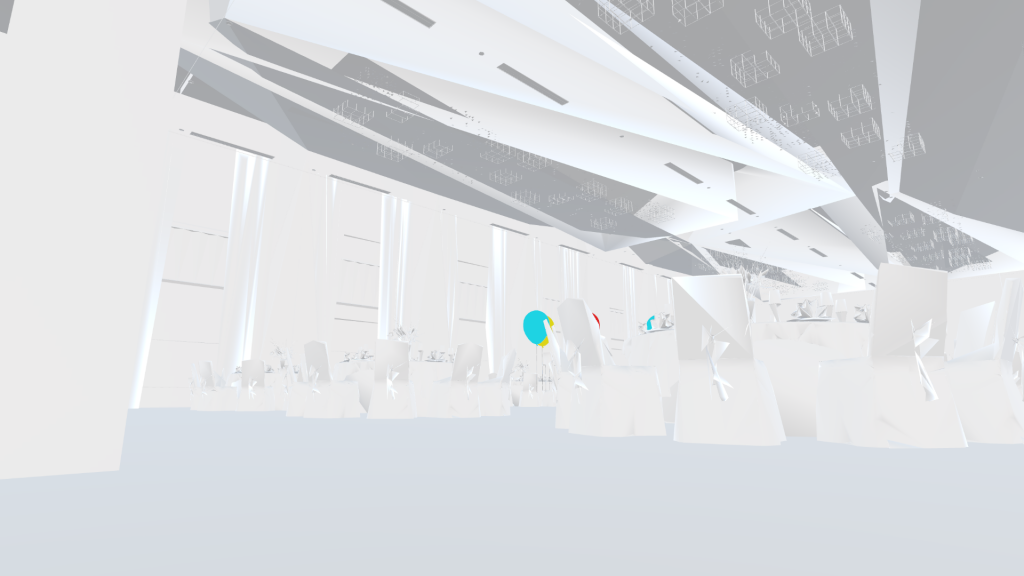
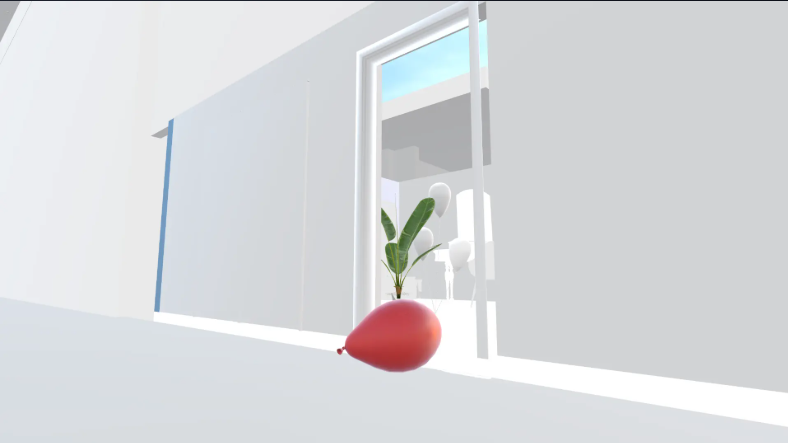
Han Han hugs you and runs off. She dashes around, carrying you into the grand wedding hall. Everything is red and festive. Suddenly Han Han notices a balloon in front of the main stage. Excited, she carries you over, sets you down, and picks up the balloon to toss it for you to play with. You bat it back to her with your mouth; Han Han hits it back up into the air, and you chase it again.
We want the audience to use their mouths to pass the ball to Han Han, rather than using their paws. If they use their paws, the balloon will pop. Only when they use their mouths can they successfully pass the ball. We’ve designed this as a hidden detail, but feel it would be too lengthy if written out in the script.
While you’re playing, the balloon drifts toward the door of the lounge. The door is half open. Through the crack, Han Han spots a room filled with many balloons. Delighted, she calls you to go into the lounge with her.
We’ve designed the door to be slightly ajar, allowing the audience to catch glimpses of what’s behind it. This creates a sense of suspense and sparks the audience’s curiosity, making Han Han’s action of opening the door feel more natural and justified.
Door-opening animation, then a quick cut-to-black transition
5/. INT. BRIDE’S LOUNGE – DAY
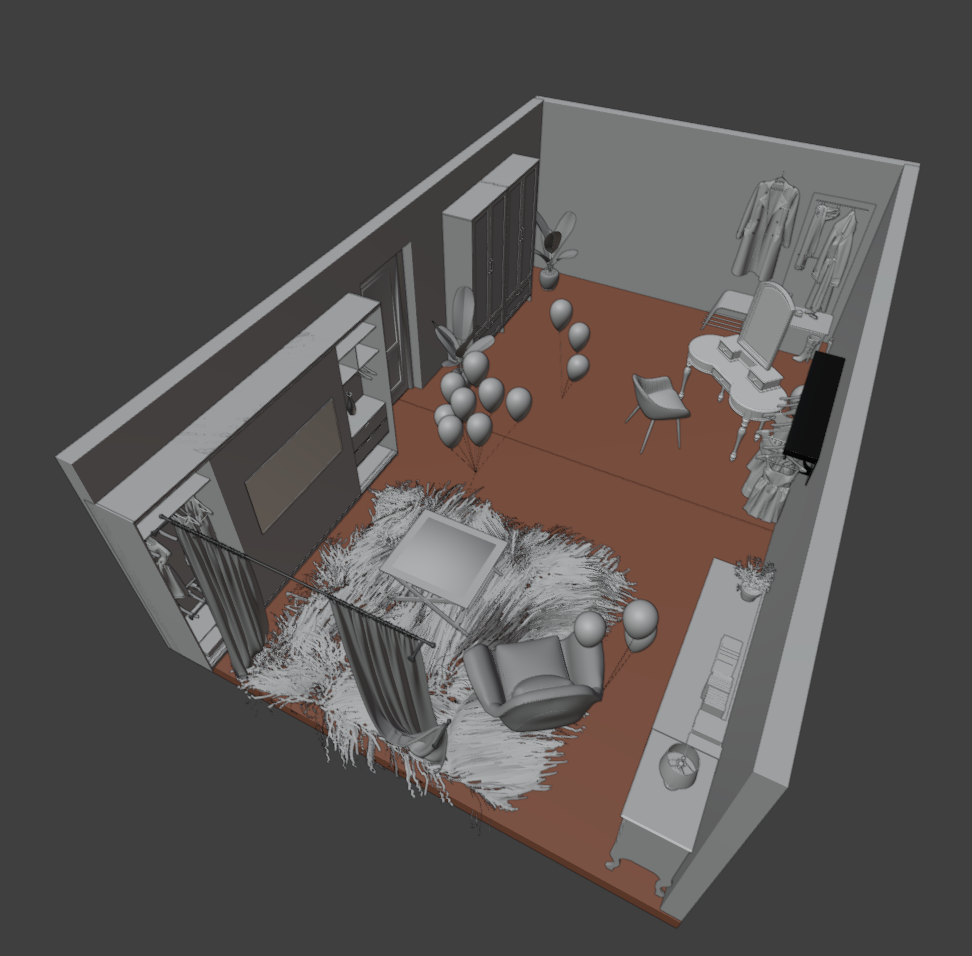
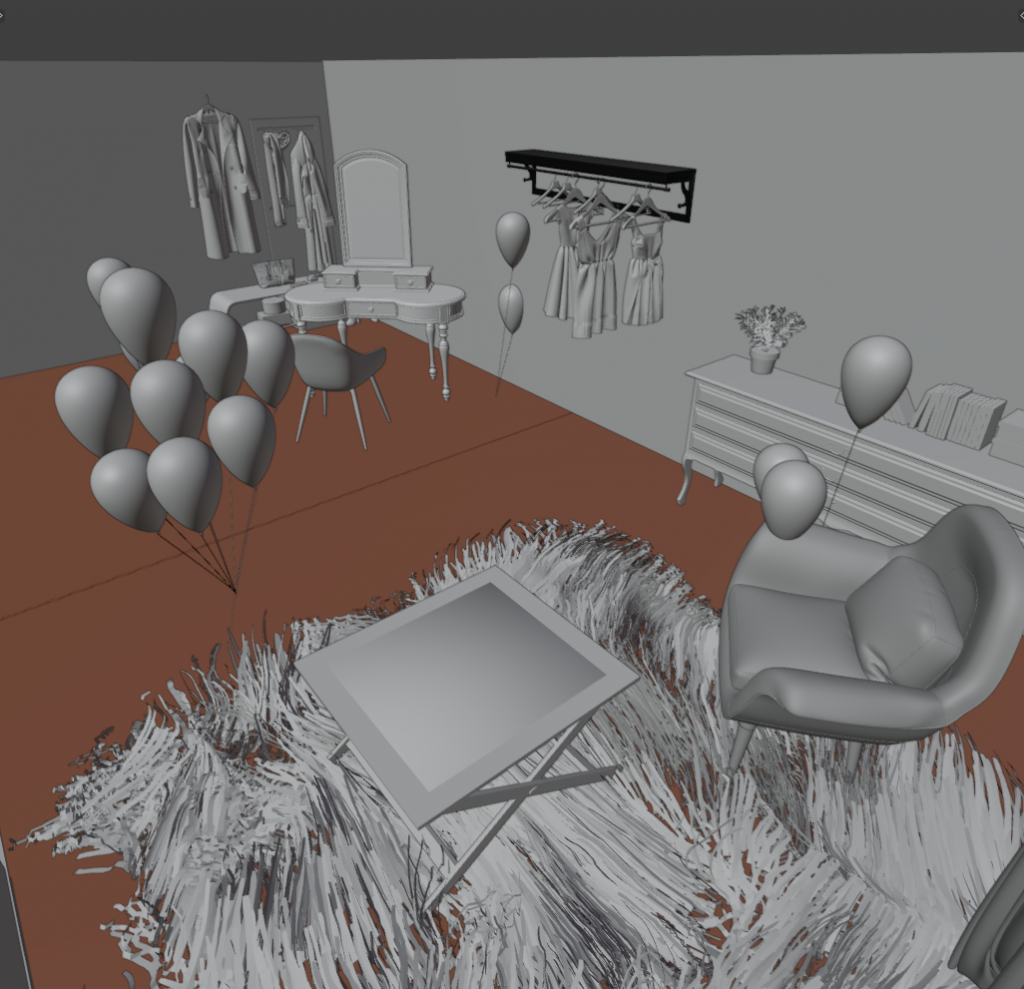
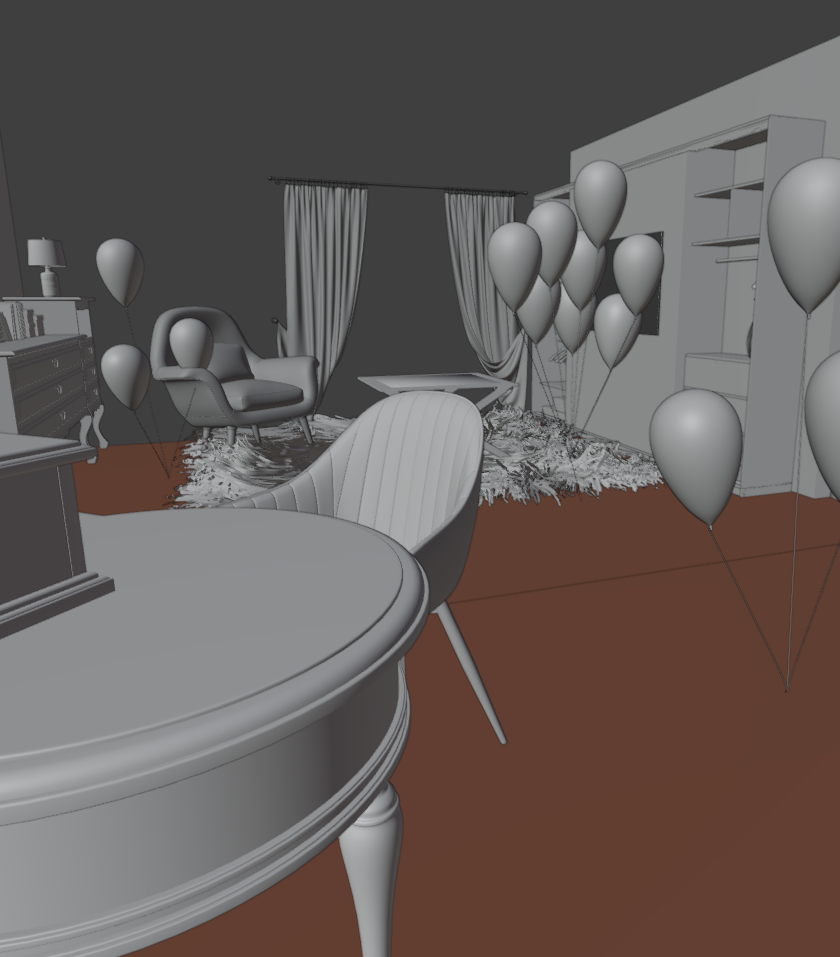
Han Han walks around the lounge with the balloon in her hands, as if she has discovered a secret place. She looks around at the ornate dressing table, all the makeup, jewelry, and accessories laid out, and a large clothes rack holding several different bridal outfits. At the very back, there is also a black wedding dress — you spot the black wedding dress that the Bride loved.
At this moment, the Bride’s Mother pushes the door open and comes in, saying:
THE BRIDE MOTHER
Han Han, how did you end up in here? Your mom is looking for you everywhere.
The Bride’s Mother reaches out to pull Han Han back. As Han Han shifts to one side, the Bride’s Mother catches sight of the black wedding dress. You see her get angry; she quickly hides the black dress in a corner of the room, then tells you to stay in the lounge and takes Han Han back to the hall.
CUT TO BLACK
After a moment, you can faintly hear traditional Chinese wedding music coming from outside. A lively emcee begins the announcements; the wedding seems to be going smoothly, with occasional cheers and applause.
CUT TO BLACK
After some time, the door opens,
The Host
…To all our dear friends and family here today, may everything go your way! Eat up, drink up, and have a wonderful time!
We’ve designed this part as an auditory narrative, locking the audience in the room to focus their attention on sound, allowing them to experience a different kind of sensory immersion.
As the host finishes the ceremony with these closing words, the exhausted Bride walks into the lounge. The moment she sees us, she smiles and pats our head:
THE BRIDE
Good dog, good dog.
The Bride strokes your head, then walks straight over to the clothes rack. She quickly notices that the black wedding dress is missing. She slides the hangers back and forth, searching but not finding it, then looks all around the room and still doesn’t see it. Just as she’s about to search somewhere else, her mother comes in.
THE BRIDE Mother
What are you looking for? Don’t bother. I’ve already thrown it away. I really don’t understand — what were you planning to keep it for?
The Bride freezes for a moment when she hears this, then stares at her mother, eyes turning red with tears.
THE BRIDE
You already threw it away and you’re still asking me why? Have you ever actually listened to what I wanted?
THE BRIDE Mother
How could you wear that shabby dress in front of everyone? Have you thought about what people would say when they see you in it?
THE BRIDE
This is my wedding. I just wanted to wear my favorite dress and take one picture. Why do I have to care who’s looking at me? I’ve done everything your way; there isn’t a single part of this that’s what I wanted. All I wanted was to change into it afterwards and take a photo, and you didn’t even ask me — you just threw it out. What do you want me to say now?
We’ve arranged a lot of dialogue here, aiming to present the conflict between the mother and daughter in the most intense way possible. This will increase the dramatic tension and make the atmosphere feel more intense and suspenseful for the audience.
The Bride storms out, slamming the door behind her. Now it’s just you and the Bride’s Mother in the lounge. The Bride’s Mother stands frozen in place, silent. You need to think of a way to help the two of them.
Suddenly you think of an idea. You go to the corner where Mom hid the dress, pick up the black wedding dress in your mouth, and carry it to her feet. She stares at the black dress, stunned.
THE BRIDE Mother
I really didn’t think about how she felt. Let’s go find her together.
The Bride’s Mother leads you out of the lounge and looks around from the doorway, but doesn’t see the Bride anywhere. Where would she go? Then you hear faint sobbing coming from the darkness behind the bright stage. You quickly run over to guide Mom there, and sure enough, the Bride is there.
The Bride Mother hands the black wedding dress to the Bride.
THE BRIDE Mother
I’m sorry, sweetheart. I… I never really thought about how you felt. I kept worrying about all those outside opinions and what people would say. You actually look beautiful in this. I’ve been trying to control everything, thinking I was helping you make it the best, but I forgot that was only what I thought was best. My daughter, you’ve grown up. This is your wedding — it should belong to you.
Although this part is meant to depict the reconciliation between mother and daughter, we’ve currently only described it through dialogue. In the future, we’d like to convey this through more metaphorical scenes or actions, making the story feel more natural.
The Bride takes the dress and hugs her mother.
THE BRIDE
Thank you, Mom.
CUT TO BLACK
The Bride stands in the middle of the crowd wearing the black wedding dress. Mom is holding you on the Bride’s right side.
THE PHOTOGRAPHER
Everyone, say cheese!
You see the flash of the photographer’s camera once again. You turn back to look at the Bride — she is smiling radiantly, holding her mother tightly in her arms.
The End
After our discussion, we changed the original farewell ending to a reunion ending, so the story can conclude on a happy note. We decided to end with a family photo, symbolizing the closure and reconciliation.
Week9 17.11 – 21.11 Draft of Script
Perspective & Character Color Guide
________________________________________
多多 TOTO (POV, Pug, Pale gray-yellow paws with dark, velvety pads, is able to move / paw / pick with mouth)
晓霞 Xia(The Bride’s Mother)
怡萱/萱萱 Xuan Xuan (The Bride)
子涵/涵涵 Han Han (The Little Girl)
We’ve reduced the number of characters, focusing on the story of just three characters, making their identities more vivid and specific. Most of the story revolves around Xia and Xuan Xuan, with Han Han serving as a guide, directing the audience to interact with and engage with the work.
FADE FROM BLACK WITH SHAPE OF DOG’S EYES
1/. INT. Bridal shop – DAY
We’ve shortened the story to keep the plot from becoming too complicated. As a result, the bride’s mother now takes over the role of guiding the audience through the interactive tutorial instead of the bride.
You are a dog, raised by the two women you love most — the Bride, and the Bride’s Mother. You look around and see the layout of the fitting area: besides a few fitting rooms, there is also a display pedestal and a large mirror. It seems to be the fitting area of a bridal shop. You hear a woman’s voice.
THE BRIDE’S MOTHER
Toto, come here! Come to me.
You move forward, walking from the fitting room to the sofa. Seeing you come over, the bride’s mother fondly pats your head.
THE BRIDE’S MOTHER
Good dog, good dog. Come on, give me your paw.
Then the Bride’s mother crouches down to play with you, picking up a leftover flower stem from the bouquet-making table and tossing it for you to fetch.
The Bride’s mother throws it onto the floor — you need to pick it up gently in its mouth and bring it back.
The Bride’s mother tosses it into a narrow gap — you first use your paw to pull it out, then pick it up with your mouth and trots back.
The Bride’s mother pets your head.
THE BRIDE’S MOTHER
Good boy. Such a good dog.
We’ve kept the sound of the door opening as a guide, but this time, it’s the fitting room door that creaks. We also make sure the audience’s gaze is directed toward the bride, who has changed into her wedding dress.
SOUND of the CURTAIN OPENING
At this moment, the Bride steps out of the fitting room, having just changed into her wedding dress. She twirls once in front of you.
THE BRIDE
What do you think? Isn’t this black wedding dress beautiful? This is the one I really want.
As the Bride talks, she steps onto the display pedestal and looks at herself in the big mirror of the fitting area, lifting her black skirt and excitedly checking herself from different angles, nodding in satisfaction.
THE BRIDE’S MOTHER
You call that a wedding dress? Who even makes something like this nowadays?
The Bride’s Mother grabs the Bride’s arm, pulling her around, and a little closer, eyes scanning up and down with a frown.
The edge of the dress brushes against you; you startled and steps back.
BRIDE
I searched for so long to find this one. It’s really special — I love it! You know, the design style is—
THE BRIDE’S MOTHER
If you dress like that, what will people think?
BRIDE
I’m not getting married for other people to see.
THE BRIDE’S MOTHER
If not for others to see, then why get married at all?
CUT
The Bride, now changed into a white wedding dress, walks out of the fitting room, looking a little dejected.
2/. INT. VOID – MONTAGE
The Bride’s Mother walks toward you and picks you up.
The Bride, dressed in a white wedding gown, steps onto the display pedestal, facing her mother instead of the mirror.The Bride’s Mother nods in satisfaction.
THE BRIDE’S MOTHER
Now this — this looks like a real bride.
BEGIN 360° VOID MONTAGE
We are no longer in the dressing room. Everything falls away into a single void: just darkness and a soft-lit circular platform.
From your in the Bride’s Mother’s arms, you stay in the center of this void. All around you. New moments appear as the Bride’s Mother’s turns.
As the Bride’s Mother slowly rotates, a spotlight snaps on over one tableau at a time, bringing it into view. When she turns past it, the light fades, and that tableau sinks back into darkness.
To one side, a dining table materializes in the void, fully set with banquet dishes. The spotlight flares on.
The Bride stands beside this dining table, proudly showing the dishes she has chosen. From you in the Bride’s Mother’s arms, you see the Bride’s Mother raise her hand and point. At her gesture, symbolic dishes appear on the same floating table — pork knuckle, Eight-Treasure Duck — and the total number of dishes shifts from odd to even.
The spotlight fades. Darkness. As the Bride’s Mother turns a little further, another tableau fades up: the Bride holding up her phone in the void, showing off a creative digital wedding invitation. Again, the Bride’s Mother raises her hand and points. The glowing phone in the Bride’s hand transforms into a bright red, physical wedding card.
The spotlight fades. Darkness. The Mother keeps turning. A new lit island appears: the Bride stands beside a pastor, introducing him. Once more, you see the Bride’s Mother point. The pastor blinks out of existence, replaced in the same spot by a lively wedding host, overflowing with flowery, formal phrases.
The spotlight fades. Darkness. Another tableau lights up: speakers and a faint suggestion of a dance floor, hanging in the dark. The Bride is previewing her favorite songs. Yet again, you see the Bride’s Mother point. The soundtrack shifts around you from English pop to traditional Chinese wedding music, rippling through the void.
BACKGOUND MUSIC CHANGE & END 360° VOID MONTAGE
TITLE PAGE IN:
囍宴THE WEDDING
FADE FROM BLACK WITH THE FLASH OF A CAMERA
3/. INT. WEDDING VENUE – DAY
The photographer gets ready to take the photo.
THE PHOTOGRAPHER
Cheers! Smile! Smile bigger!
The bride’s mother stands behind the photographer, smiling with satisfaction.
THE PHOTOGRAPHER
Good, good, good, great. The bride looks beautiful and happy!
The photographer checks the photo and gives an “OK” hand gesture.
The Bride immediately lets out a sigh of relief. You see that the bride is wearing the wedding dress her mother chose for her. The Bride looks deflated, rubbing her waist.
After the photo is taken, the Groom puts you down. you see the Groom and Bride standing at the entrance.
At this moment, Han Han and her mother arrive.
THE BRIDE MOTHER
What are you doing? Your aunt is here.
You see the bride and groom quickly rush over to greet them.
The bride hurriedly greets her aunt, and the aunt and the bride exchange pleasantries. The Bride looks at the daughter whom her aunt brought, Han Han.
THE BRIDE
Han Han! You’ve arrived!
Han Han froze for a moment, then quickly hide behind her mother, gripping her mother’s arm, and peeked at the Bride.
THE BRIDE’S MOTHER
(To Han Han)
Why are you so shy? Don’t you recognize Sister Xuan Xuan anymore?
We’ve removed the emotion from the dialogue but kept the ‘To Han Han’ part, as we believe this makes the entire script clearer.
Han Han suddenly turned around, spotted you, and immediately broke free from her mom’s hand, running toward you.
Han Han runs over happily and lifts you into the air, spinning you around. You feel as if you’re flying.
As you spin, the reception hall disappears and the wedding hall appears
4/. INT. WEDDING HALL – DAY
Han Han sets you back down on the ground.
In the wedding hall, everything is red and festive. You are surrounded by balloons. Excited, she picks up the balloon to toss it for you to play with. You bat it back to her with your mouth, tossing the balloon back and forth. While you’re playing, Han Han throws the balloon into the lounge.
The door is half open. Through the crack, you spots a room filled with many balloons. Delighted, You push the door open and get into the lounge.
Door-opening animation, then a quick cut-to-black transition
5/. INT. BRIDE’S LOUNGE – DAY
Han Han follow you, and walks around the lounge. You looks around at the ornate dressing table, all the makeup, jewelry, and accessories laid out, and a large clothes rack holding several different bridal outfits. At the very back, there is also a black wedding dress — you spot the black wedding dress that the Bride loved.
At this moment, the Bride’s Mother pushes the door open and comes in, saying:
THE BRIDE’s MOTHER
Han Han, how did you end up in here? Your mom is looking for you everywhere.
The Bride’s Mother reaches out to pull Han Han back. As Han Han shifts to one side, the Bride’s Mother catches sight of the black wedding dress. You see her get angry; she quickly hides the black dress in a corner of the room, then tells you to stay in the lounge and takes Han Han back to the hall.
CUT TO BLACK
After a moment, you can faintly hear traditional Chinese wedding music coming from outside. A lively emcee begins the announcements; the wedding seems to be going smoothly, with occasional cheers and applause.
CUT TO BLACK
After some time, the door opens.
The Host
…To all our dear friends and family here today, may everything go your way! Eat up, drink up, and have a wonderful time!
As the host finishes the ceremony with these closing words, the exhausted Bride walks into the lounge. The moment she sees us, she smiles and pats our head:
THE BRIDE
Good dog, good dog.
The Bride strokes your head, then walks straight over to the clothes rack. She quickly notices that the black wedding dress is missing. She slides the hangers back and forth, searching but not finding it, then looks all around the room and still doesn’t see it. Just as she’s about to search somewhere else, her mother comes in, followed by Han Han.
THE BRIDE Mother
What are you looking for? Don’t bother. I’ve already thrown it away. I really don’t understand — what were you planning to keep it for?
The Bride freezes for a moment when she hears this, then stares at her mother, eyes turning red with tears.
THE BRIDE
You already threw it away and you’re still asking me why? Have you ever actually listened to what I wanted?
THE BRIDE’S Mother
How could you wear that shabby dress in front of everyone? Have you thought about what people would say when they see you in it?
THE BRIDE
This is my wedding. I just wanted to wear my favorite dress and take one picture. Why do I have to care who’s looking at me? I’ve done everything your way; there isn’t a single part of this that’s what I wanted. All I wanted was to change into it afterwards and take a photo, and you didn’t even ask me — you just threw it out. What do you want me to say now?
The Bride storms out, slamming the door behind her. The Bride’s Mother stands frozen in place, silent. You need to think of a way to help the two of them.
Han Han whispers softly beside you.
HAN HAN
Why can’t I wear the wedding dress? Isn’t a black wedding dress very beautiful?
This part is designed as a bridge for interaction to prevent the audience from getting stuck. If the audience has already taken action earlier, the following prompt scene will not occur.
(If you don’t take action) Han Han tries to search the room for the black wedding dress, repeatedly saying
HAN HAN
Where did Auntie hide the wedding dress just now? Where is that black wedding dress?
You can still see the place where the mother just hid the wedding dress (hint).
You go to the corner where the Bride’s Mother hide the dress, pick up the black wedding dress in your mouth, and carry it to her feet. She stares at the black dress, stunned.
THE BRIDE’S Mother
I really didn’t think about how she felt. Let’s go find her together.
The Bride’s Mother leads you out of the lounge and looks around from the doorway, but doesn’t see the Bride anywhere. Where would she go? Then you hear faint sobbing coming from the darkness behind the bright stage. You quickly run over to guide Mom there, and sure enough, the Bride is there.
The Bride Mother hands the black wedding dress to the Bride.
THE BRIDE’S MOTHER
I’m sorry, sweetheart. I… I never really thought about how you felt. I kept worrying about all those outside opinions and what people would say. You actually look beautiful in this. I’ve been trying to control everything, thinking I was helping you make it the best, but I forgot that was only what I thought was best. My daughter, you’ve grown up. This is your wedding — it should belong to you.
The Bride takes the dress and hugs her mother.
THE BRIDE
Thank you, Mom.
CUT TO BLACK
The Bride stands in the middle of the crowd wearing the black wedding dress. Mom is holding you on the Bride’s right side.
THE PHOTOGRAPHER
Everyone, say cheese!
You see the flash of the photographer’s camera once again. You turn back to look at the Bride — she is smiling radiantly, holding her mother tightly in her arms.
The End
WEEK10 24.11 – 28.11 Storyboard Draft of the First Scene
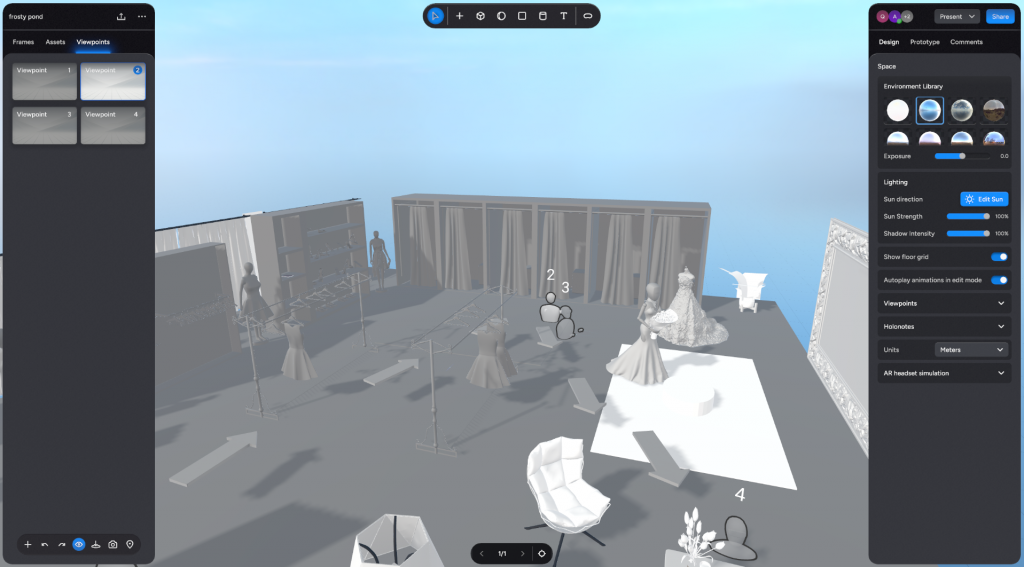
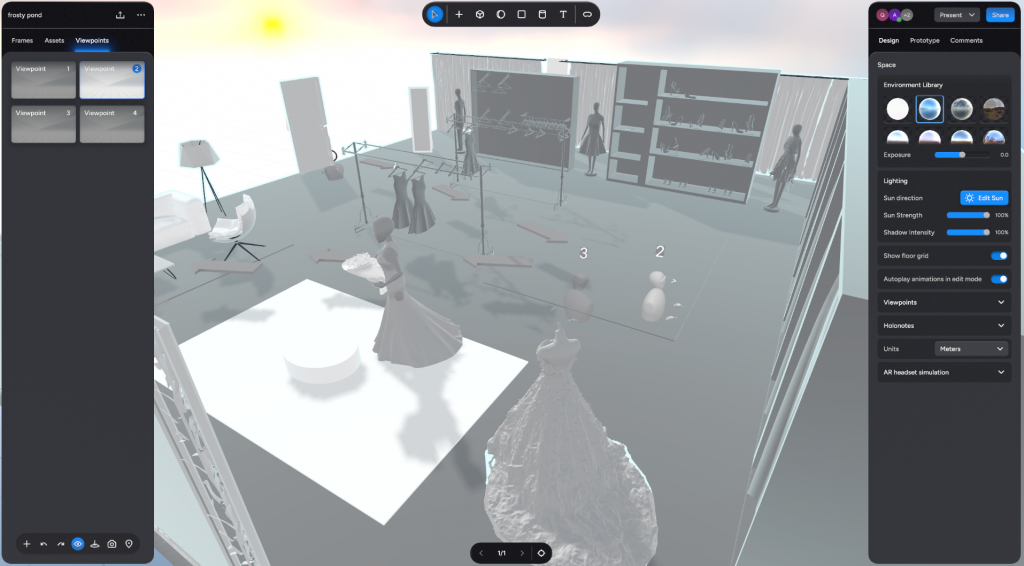
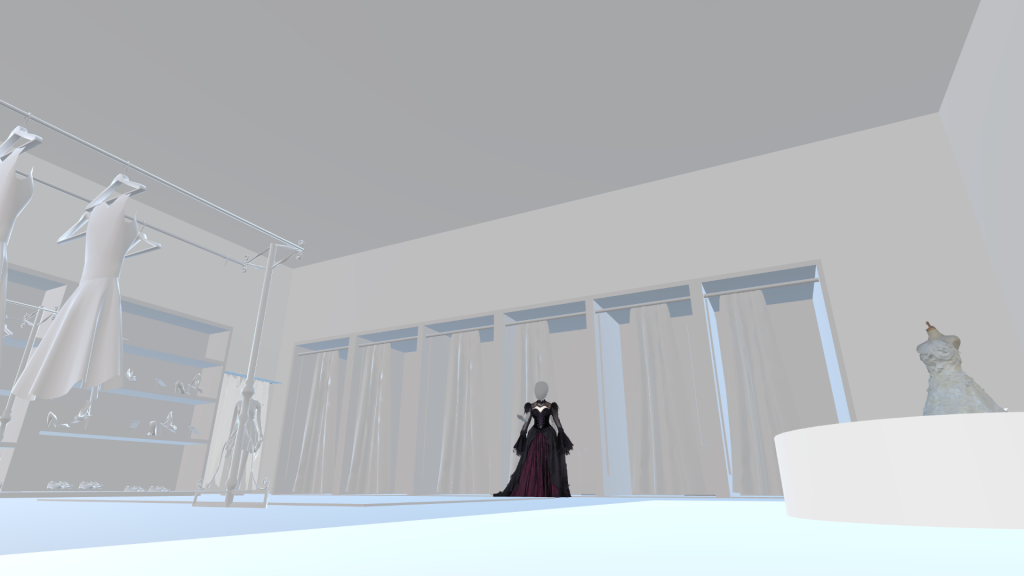
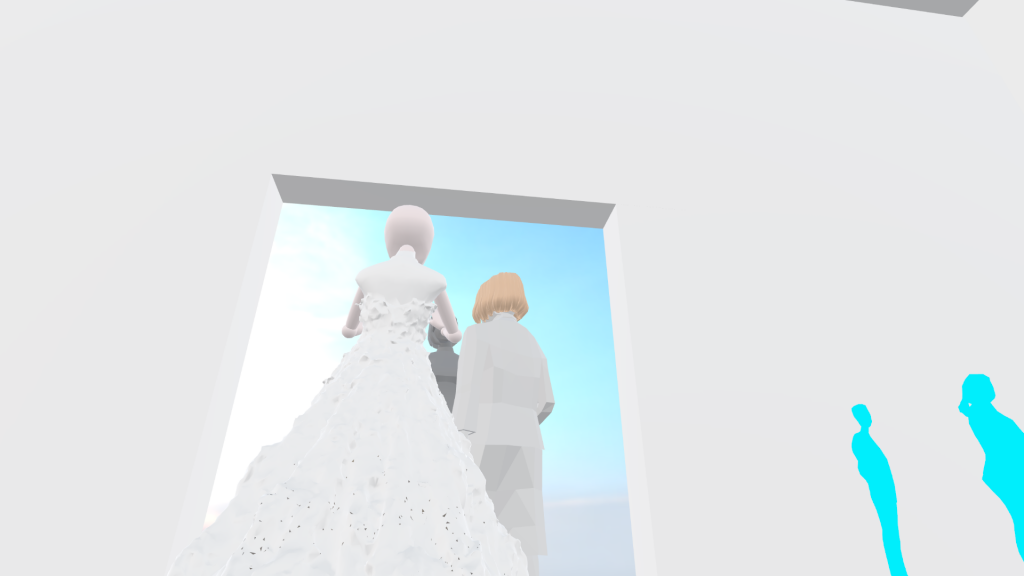
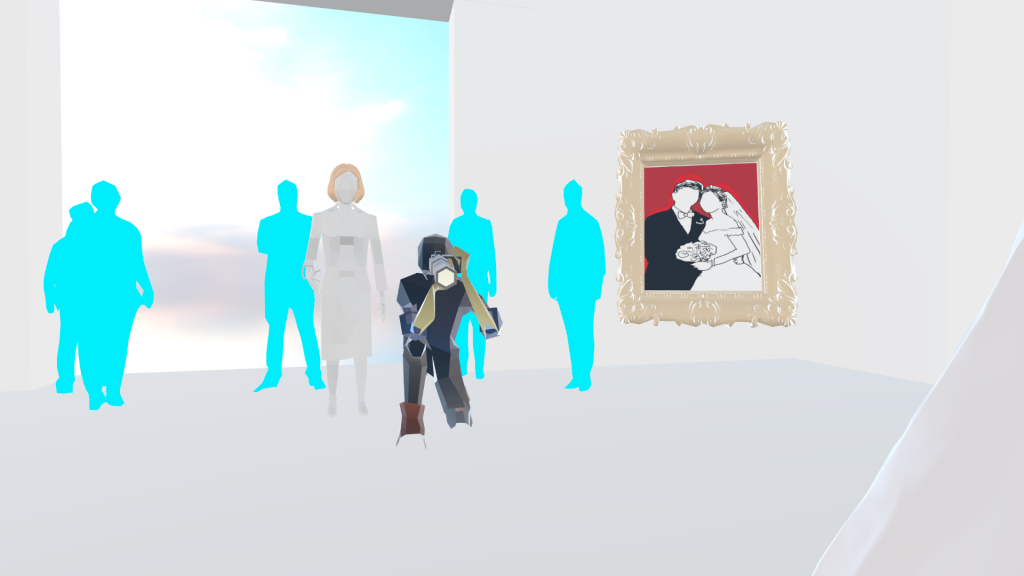
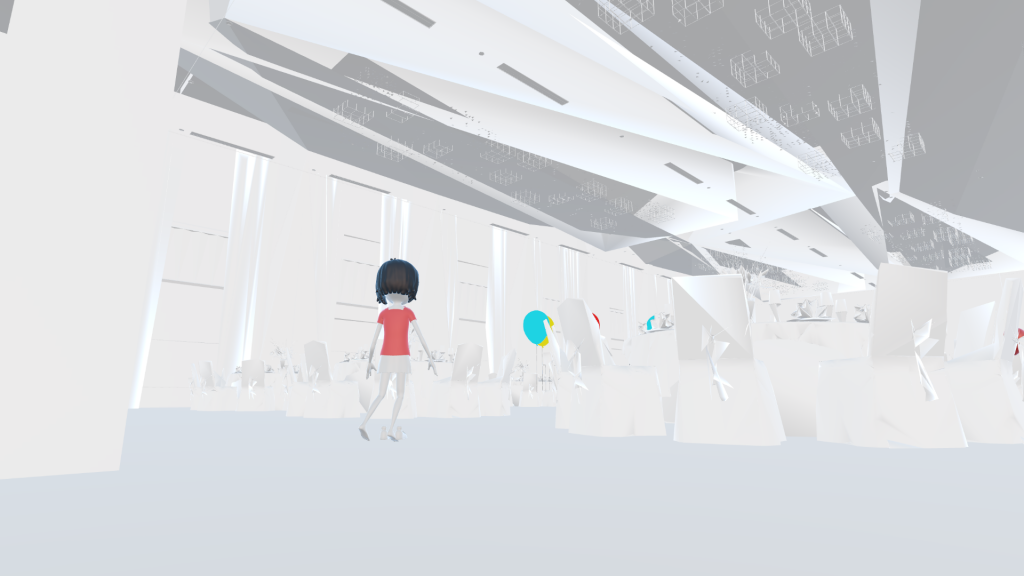
We have completed the first version of Scene 1’s spatial planning in XRspace, designed the movement flow, and finalized most of the character and object styles.
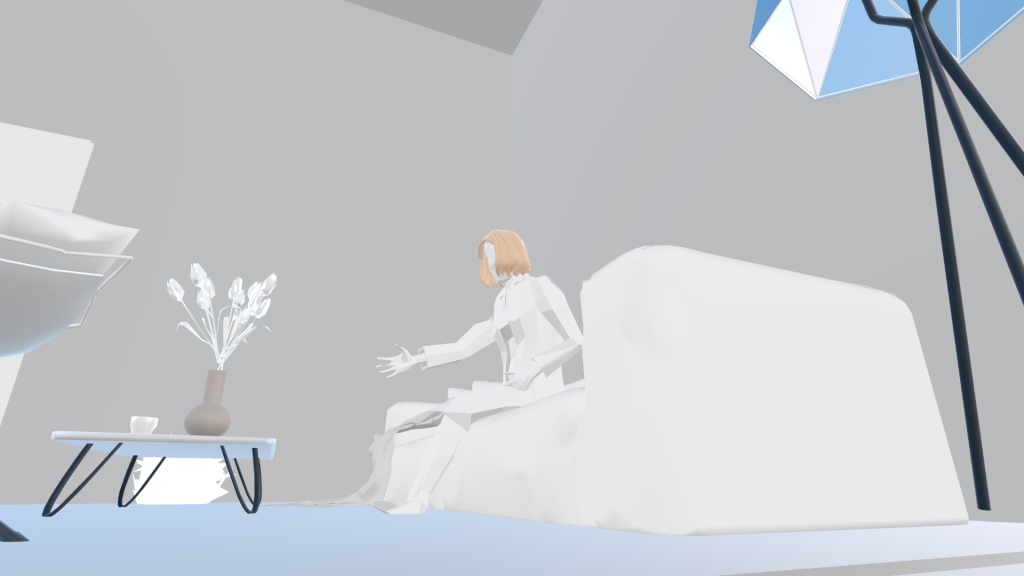
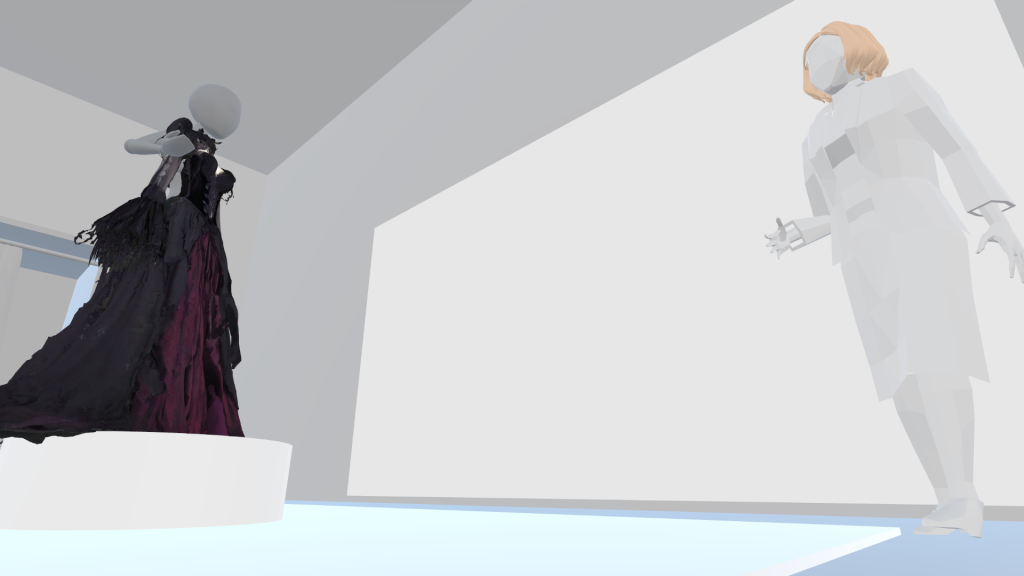
Important objects include the dressing room, display stand, and mirror.
The sofa area where the bride and mother have their conversation.
The white wedding dress on the side.
WEEK11 01.12 – 05.12 Event List
We made slight revisions to the script based on the teacher’s feedback, and have completed the event list based on the current script.
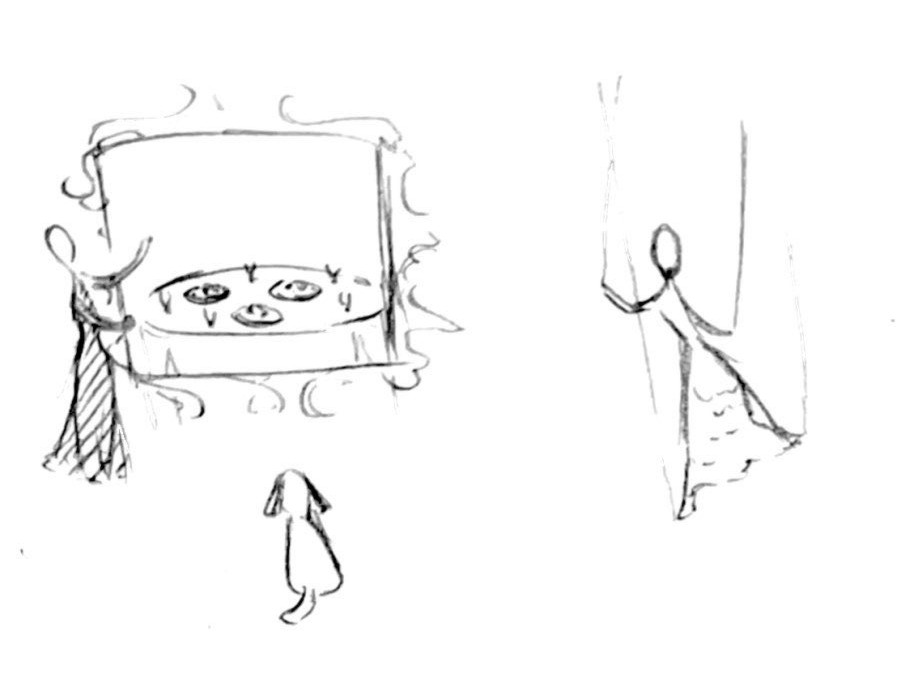
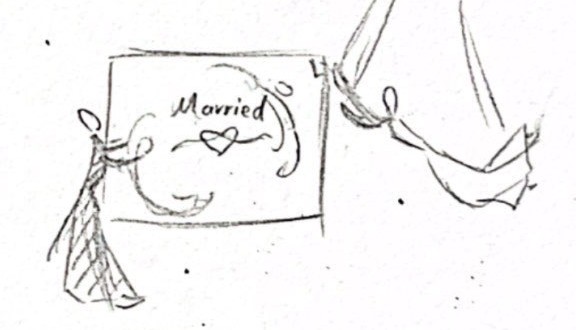
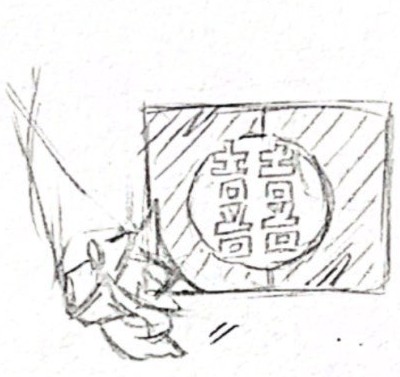
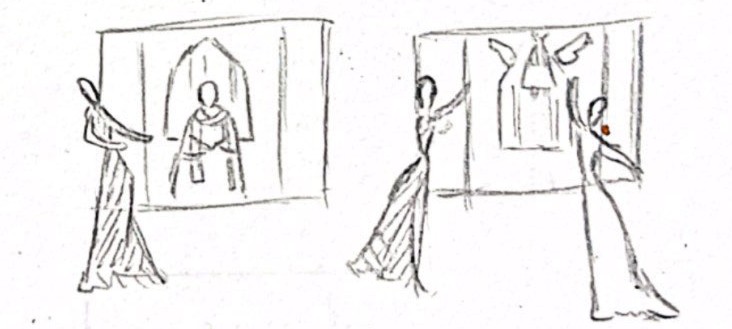
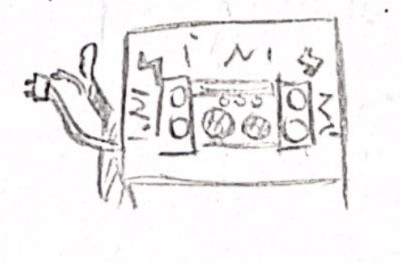
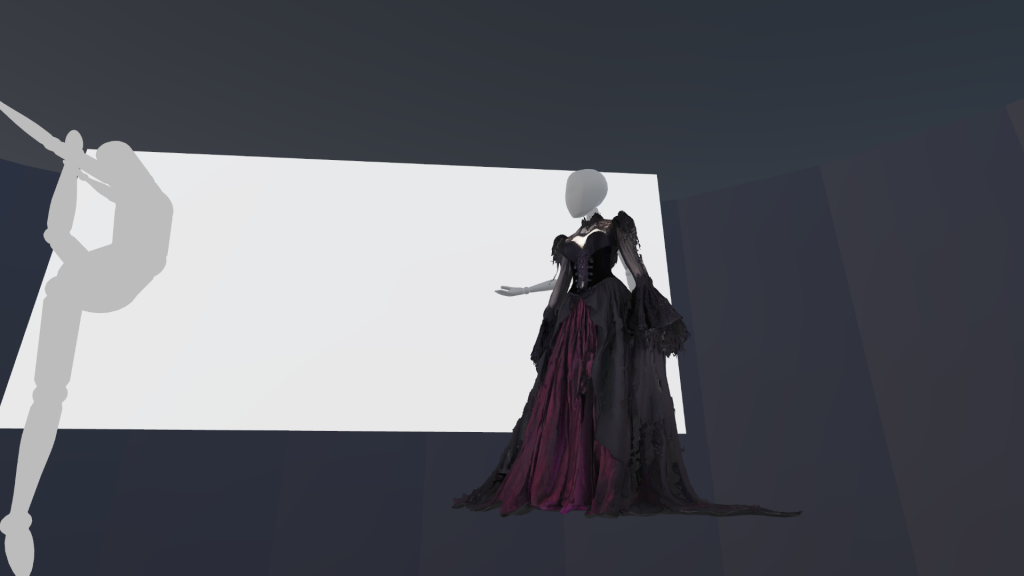
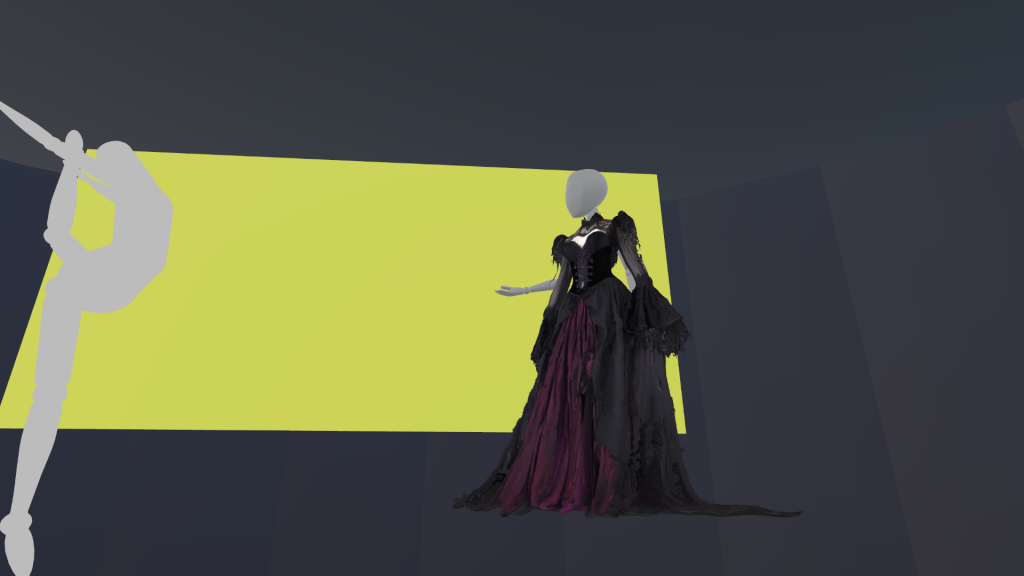
Scene2/ The montage shot is done in a way where the mannequin chases the bride. After the bride excitedly introduces the image of the wedding she envisioned, the mannequin steps forward and erases parts of the image, replacing them with a more traditional style (one that the bride’s mother prefers).
about the dishes
about wedding card
about host and music
We want to show the ongoing conflict between mother and daughter, highlighting how their differing expectations for the life.
From Scene 2 to Scene 3, we designed a new transition to connect the two scenes, bridging the surreal montage space with the real wedding venue.
The scene begins with the bride wearing a black wedding dress in the montage. As her mother says, “Don’t you like it?”, the bride freezes in place and forces a fake smile. With the flash of the photographer’s camera, there’s a brief white screen, and when the image clears, the first thing we see is the bride in the same position, with the same fake smile, but now wearing a white wedding dress. It then becomes clear that this is a wedding photo of her and the groom. Soon after, the photographer and the bride’s mother appear, providing context to the audience about the current event and location. Finally, the audience realizes that the scene they’re watching is of the bride being held in the groom’s arms for the photo.
The bride shows signs of discomfort, revealing that the white wedding dress doesn’t suit her.
I am particularly curious about how VR headsets and controllers can be used to control the behaviors of animal avatars in the game, and I want to find more related research and references. By studying these topics in depth, we can ground our script design in solid research and achieve better outcomes.
The text inside the black box is a direct quotation from the paper.
VR Animals: Surreal Body Ownership in Virtual Reality Games.
The article examines three types of animal avatars—bats, lions, and spiders—and categorizes the design approaches into three distinct modes.
Here are the design modes planned in the article.
FB (Full Body):Player posture is mapped to the whole virtual body
HB (Half Body):Lower boyd mapped to all limbs of an animal.
3CAM:Avatar Sticks to Cam (Third Person Mode). The avatar is in front of the player and traslated in sync upon Player movement or rotation.
3NAV:Avatar Navigation (Third Person Mode). Similar to 3CAM, but avatar walks towards the target on its own.
3FOL:Cam Follows Avatar (Third Person Mode). Player “is a cam” that follows the avatar. Player rotation triggers cam translation and rotation around the avatar.
Virtual Body Ownership (VBO)
Additionally, by reading the entire paper, I came across this interesting term and its corresponding IVBO-related questionnaire items discussed in the article.
I was captivated by my experience
I got along with the controls
I felt as if the body I saw in the virtual mirror might be my body
I felt as if the body parts I looked upon where my body parts
the movements I saw in the virtual mirror make seemed to be my own morements
I enjoyed controlling the virtual body I saw in the virtual mirror
I falt as if I was controlling the movement I saw in the virtual mirror
The illusion of owning a differenct body than my real one was very strong.
Krekhov, A., Cmentowski, S. & Krüger, J., 2018. VR Animals: Surreal Body Ownership in Virtual Reality Games. In: CHI PLAY’18 Extended Abstracts, 28–31 October 2018, Melbourne, Australia. ACM, 503. doi: https://doi.org/10.1145/3270316.3271545.
VR embodiment of a virtual animal character with a virtual reality headset and two controllers
In this study, the researchers clearly present their function design through a combination of images and text. In addition to basic human-like movement and behavior, the control buttons include more detailed functions such as mouth opening and blinking, as well as controls for ear movement and breathing.
The researchers also introduced a breathing button. When the audience presses this button, not only does the character’s chest rise and fall, but the sound of breathing can also be heard. This design inspired new ideas and possibilities for my own approach to interaction design.
Furthermore, the way the researchers designed the control buttons resembles how players manipulate an avatar in a game, similar to controlling a puppet. However, I would prefer the player to feel that they are the avatar within the experience, rather than merely controlling it. Therefore, I hope to explore more intuitive interaction methods, such as hand tracking, to enhance the sense of embodiment.
Ducatez, T., 2022. VR embodiment of a virtual animal character with a virtual reality headset and two controllers. M.Eng dissertation. University of Dublin, Trinity College. Supervisors: R. McDonnell.
WEEK14 22.12 – 26.12 Find Refferences
Avatar Embodiment. A Standardized Questionnaire
Inspired by the questionnaire used in last week’s reference (VR Animals: Surreal Body Ownership in Virtual Reality Games), I further searched for additional references related to embodiment and user experience questionnaires.
This study focuses on questionnaire design and, through experiments and data analysis, summarizes the following set of questionnaire items in the paper.
I felt out of my body
I felt as if my (real) body were drifting toward the virtual body or as if the virtual body were drifting toward my (real) body
I felt as if the movements of the virtual body were influencing my own movements
It felt as if my (real) body were turning into an ‘avatar’ body
At somepoint it felt as if my real body was starting to take on the posture or shape of the virtual body that I saw
I felt like I was wearing different clothes from when I came to the laboratory
I felt as if my body had changed
I felt a ____ sensation in my body when I saw ____
I felt that my own body could be affected by ____
I felt as if the virtual body was my body
At somepoint it felt that the virtual body resembled my own (real) body, in terms of shape, skin tone or other visual features
I felt as if my body was located where I saw the virtual body
It felt like I could control the virtual body as if it was my own body
It seemed as if I felt the touch of the____ in the location where I saw the virtual body touched
It seemed as if the touch I felt was caused by the body touching the virtual ____
It seemed as if my body was touching the ____
Peck, T.C. and Gonzalez-Franco, M. (2021) ‘Avatar Embodiment. A Standardized Questionnaire’, Frontiers in Virtual Reality, 1, p. 575943. doi: 10.3389/frvir.2020.575943.
Generalizing wave gestures from sparse examples for real-time character control.
While searching for research on how non-human avatar behaviors can be connected to user control, I came across this study, which presents a particularly novel perspective. It suggests that, through algorithms, this connection can be made more dynamic. When the user moves, the avatar’s responsive behaviors should also be linked to the user’s emotional state, rather than relying on rigid button-based inputs or repetitive actions. Such an approach can enhance the user’s sense of embodiment and immersion when interacting with the avatar.
They used parameters known as AFP (amplitude, frequency, and phase) to create parametrized motion graphs for both the avatar and the user, and then connected the two to generate the final animation result.
I really appreciate the wide range of possibilities for feedback design proposed in this paper. Instead of relying solely on one-to-one mappings, feedback can be designed as multidimensional and more complex relationships. As the story progresses, the avatar’s behaviors triggered by the audience’s button presses or actions should also evolve, rather than remaining as a single, repetitive animation.
Rhodin, H., Tompkin, J., Kim, K.I., de Aguiar, E., Pfister, H., Seidel, H.-P. and Theobalt, C., 2015. Generalizing wave gestures from sparse examples for real-time character control. ACM Transactions on Graphics (TOG), 34(6), pp.1-12. doi: https://doi.org/10.1145/2816795.2818082.
WEEK15 29.12 – 02.01 3D Model
I was assigned to create the lounge model, so I built the corresponding room based on partial sketches drawn by my teammates.
WEEK16 05.01 – 09.01 XRspace Record
We placed the model into the XRspace app and recorded a video. In addition to placing the model together with everyone, I also captured various screenshots.